person — a second body, fed by habit
Feeding the Cloud
A critical wearable. Each food-related upload, a photo, a search, a booking, an order, fills a second stomach a little, so the feeding of the cloud can be felt, seen and argued with.
- Year
- 2025–26 · Data Skin, the second version, 2026
- Role
- Individual project: research, concept, interaction, prototyping, film, booklet
- Institution
- Elisava Barcelona School of Design and Engineering · Personal Project, Self Data module · faculty: Valeria Castillo Moreno, Anna Gayete i Vidal, Mario Santamaría, Ivan Paz Ortiz
- Status
- Shown at Algorithmic Intimacy in Warfare Times, Elisava Barcelona School of Design and Engineering, 2026
Many of my meals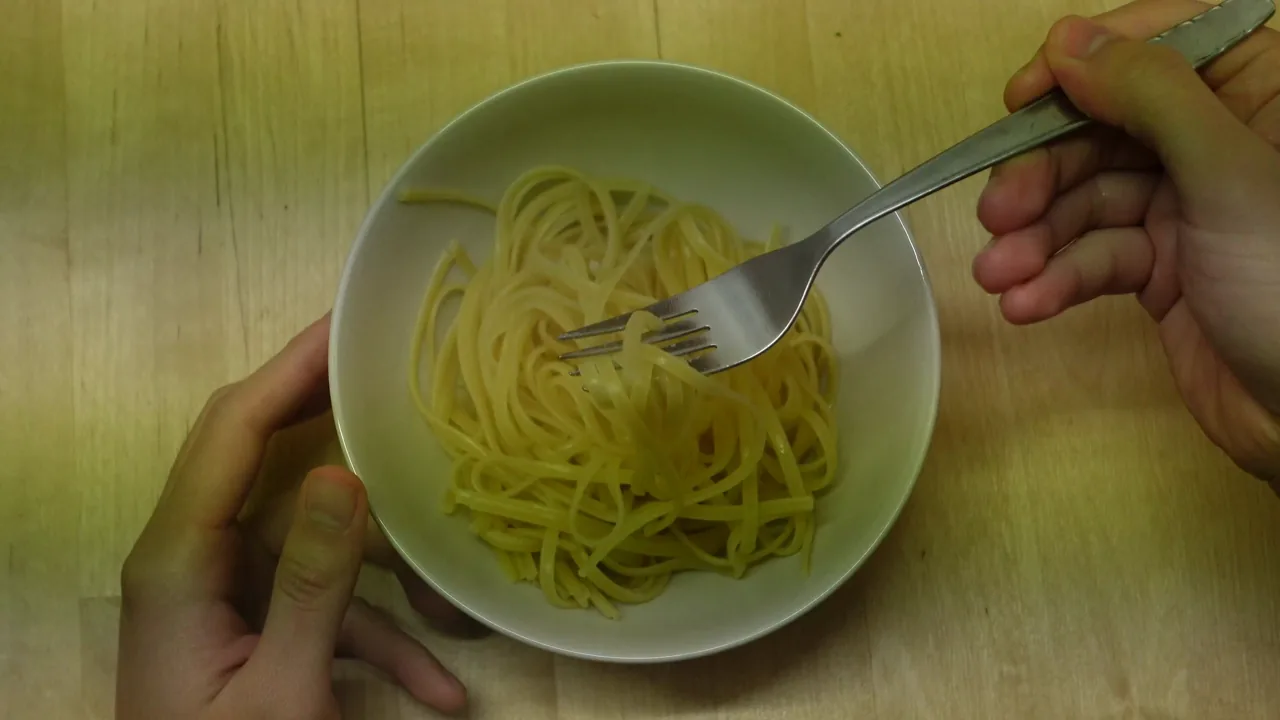 pass through apps
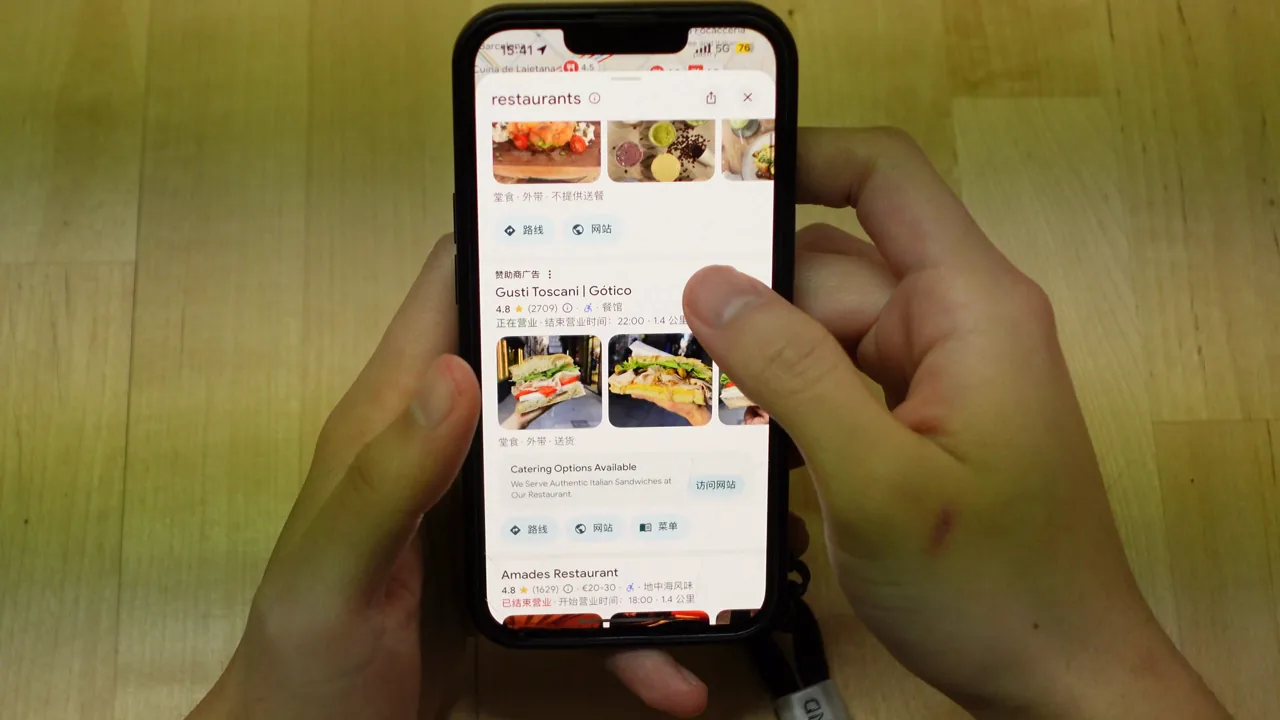 , and each photo, search, booking and order is stored elsewhere
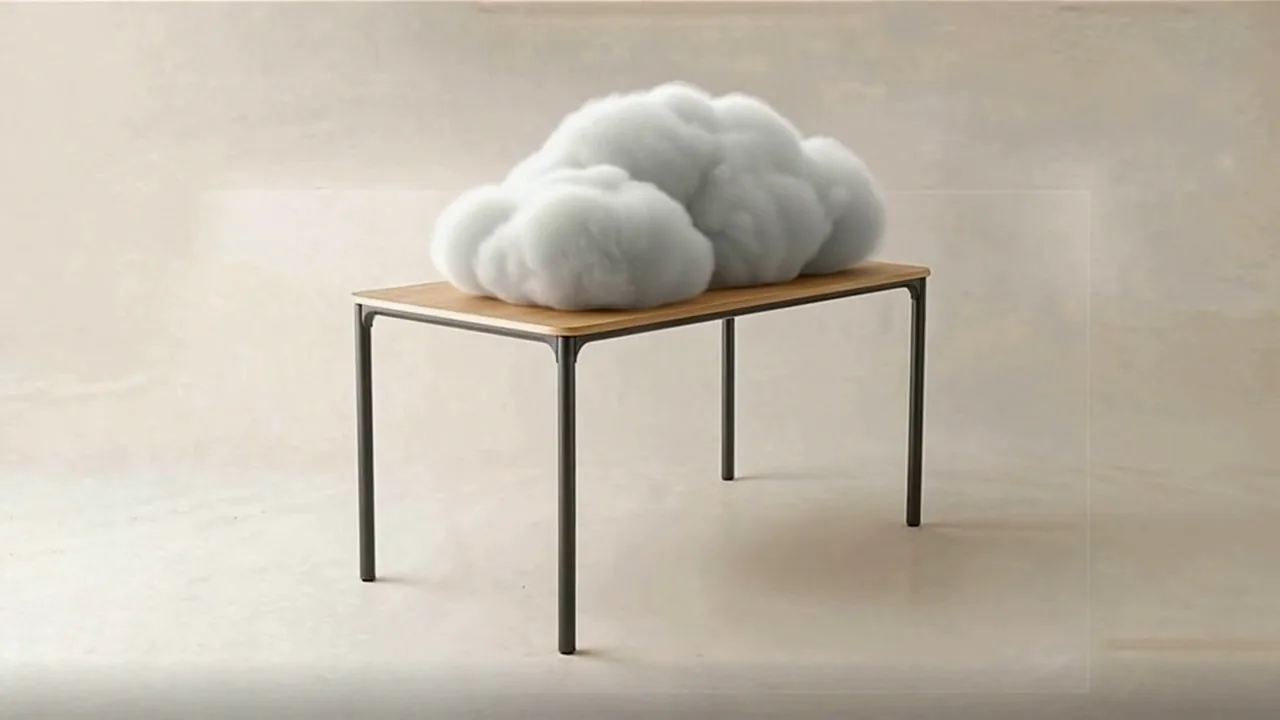 . The data grows while my body stays the same, and I never decided to feed it. Feeding the Cloud is a critical wearable: a second stomach
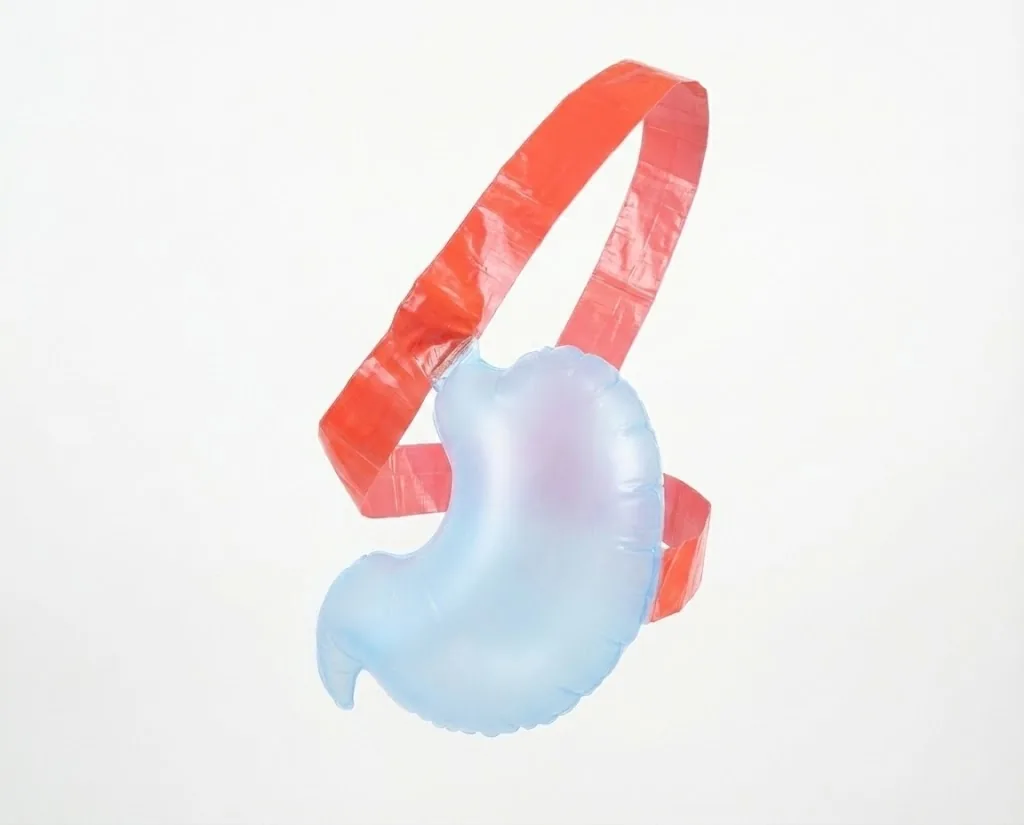 that fills a little with each food-related upload, so this feeding can be felt, seen and argued with.
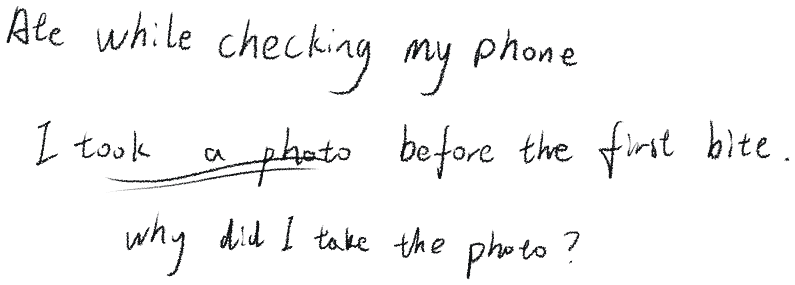
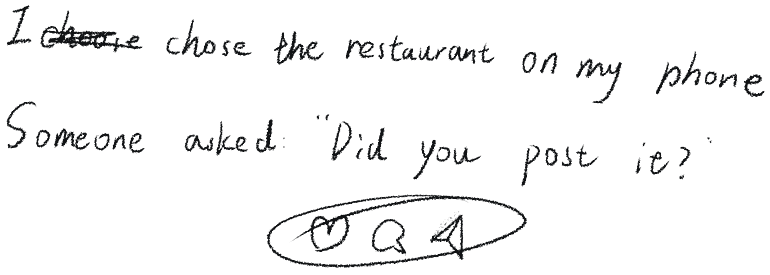
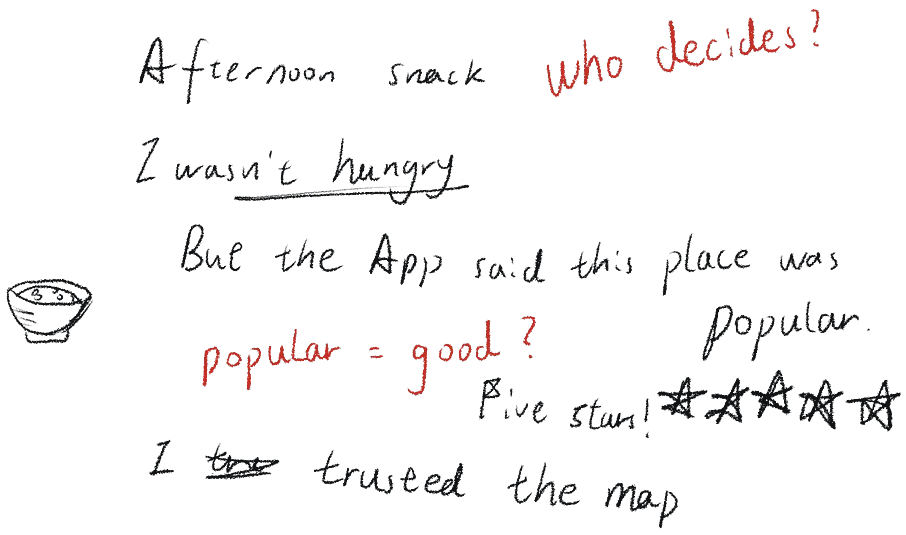
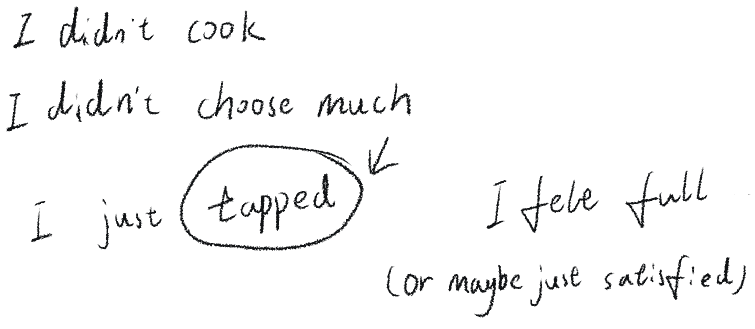
01The diary
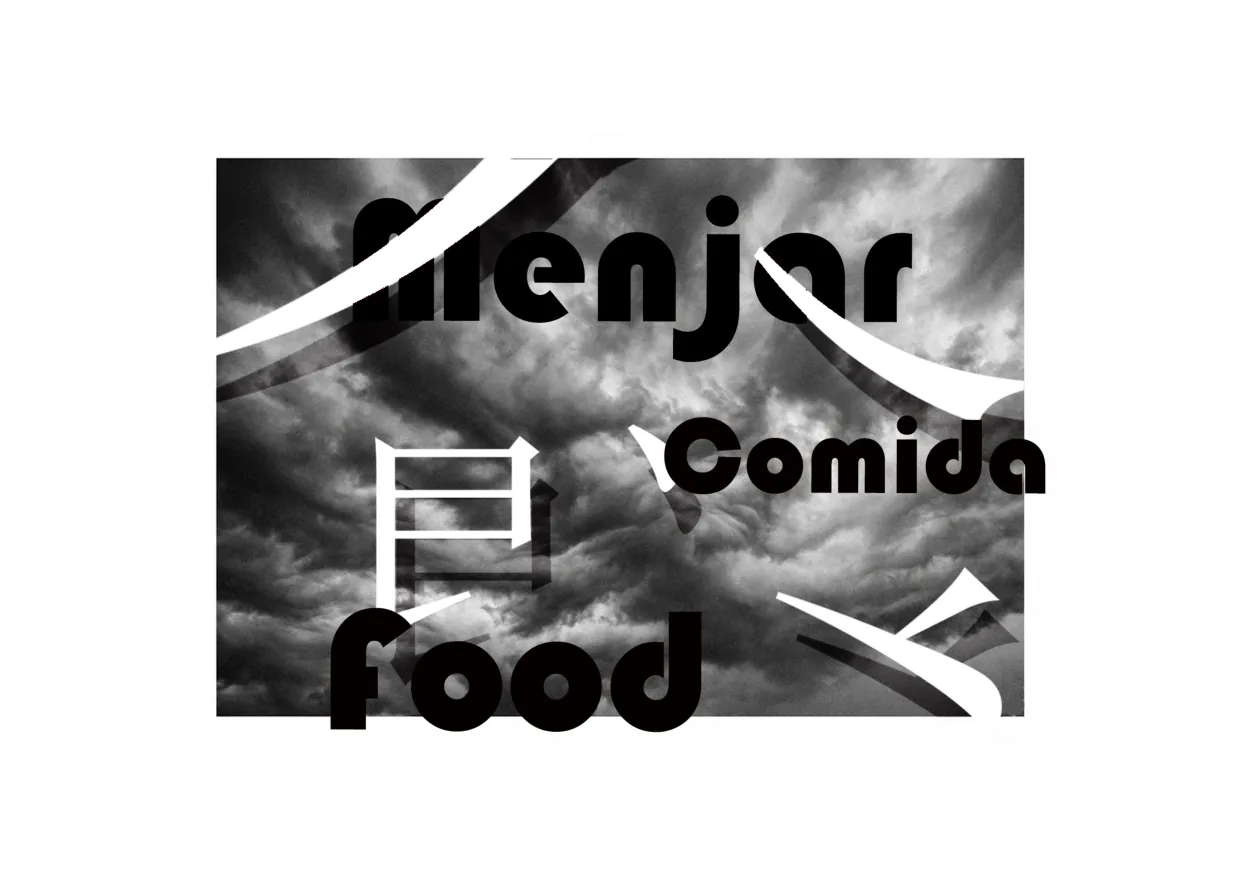
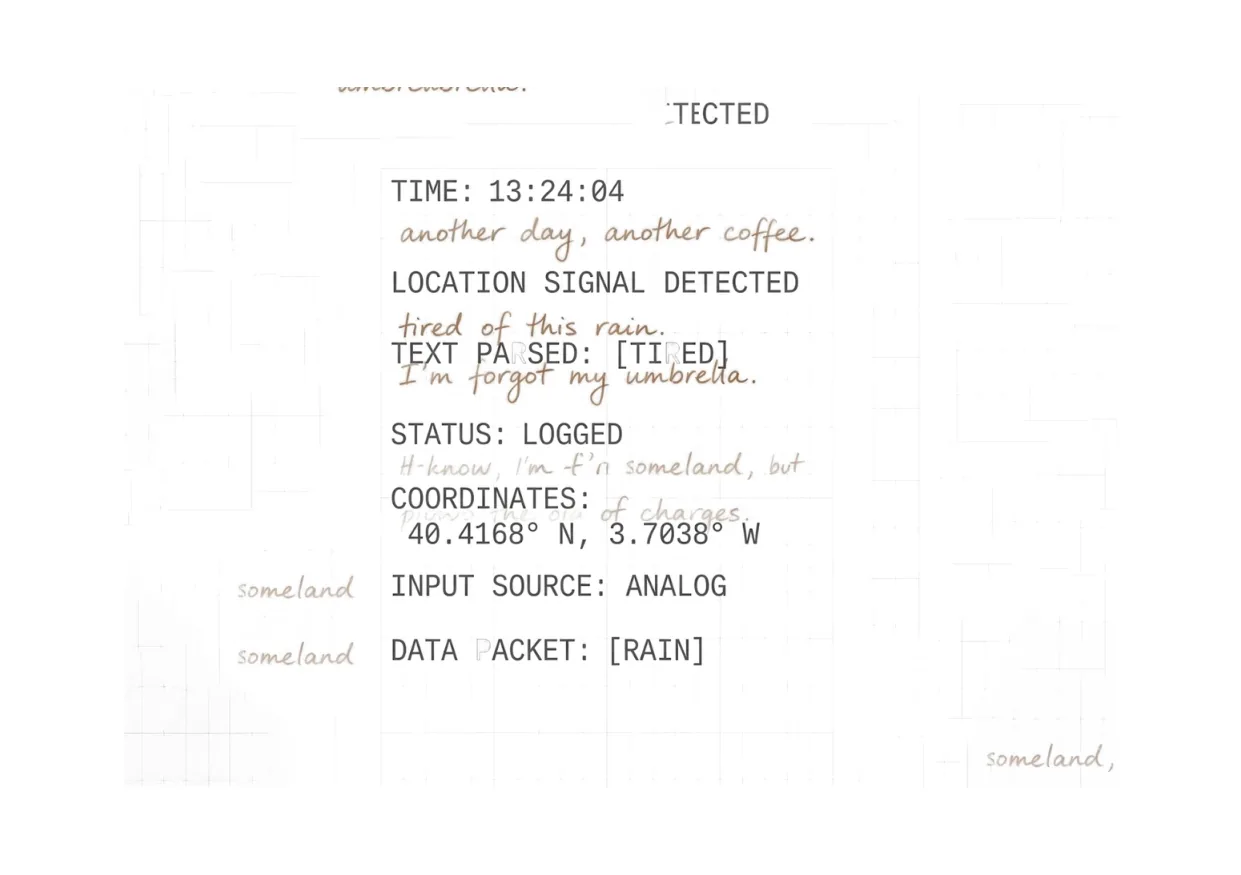
Four diary entries, an app in each.
For the Self Data brief I kept a handwritten food diary. In four entries, an app stood between me and the meal.
02The film
I didn’t eat more. Something else did.
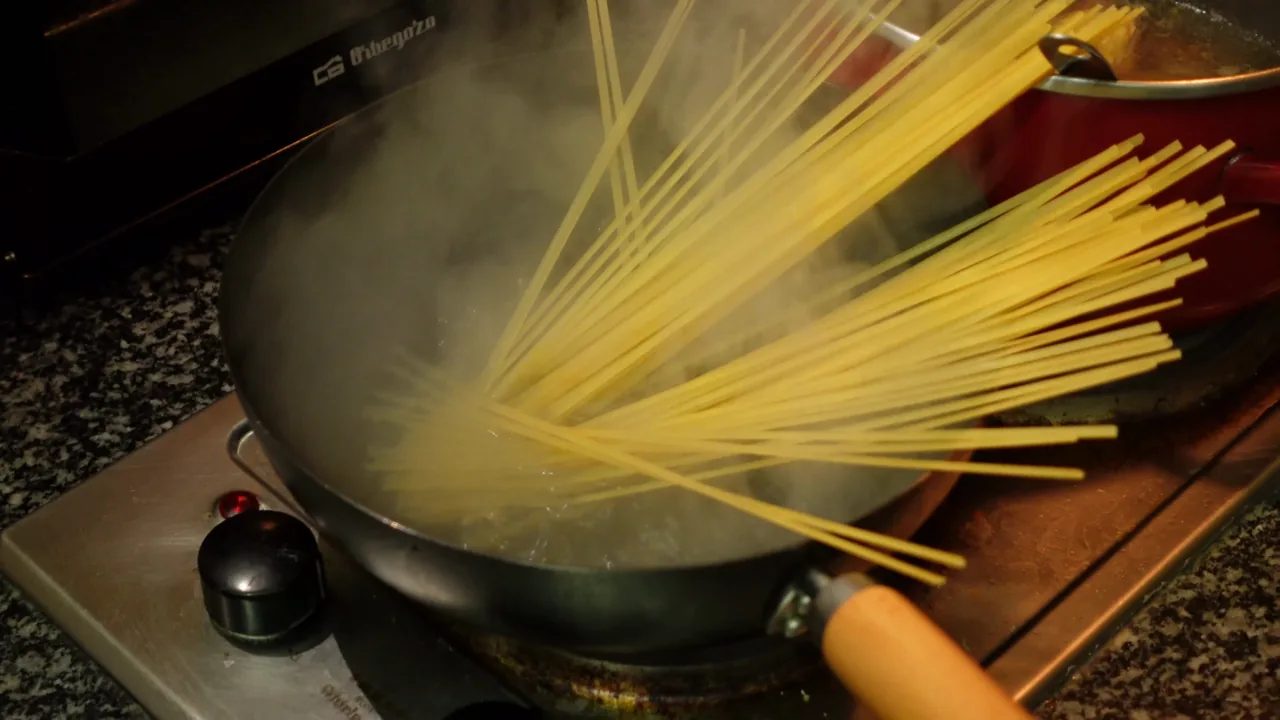
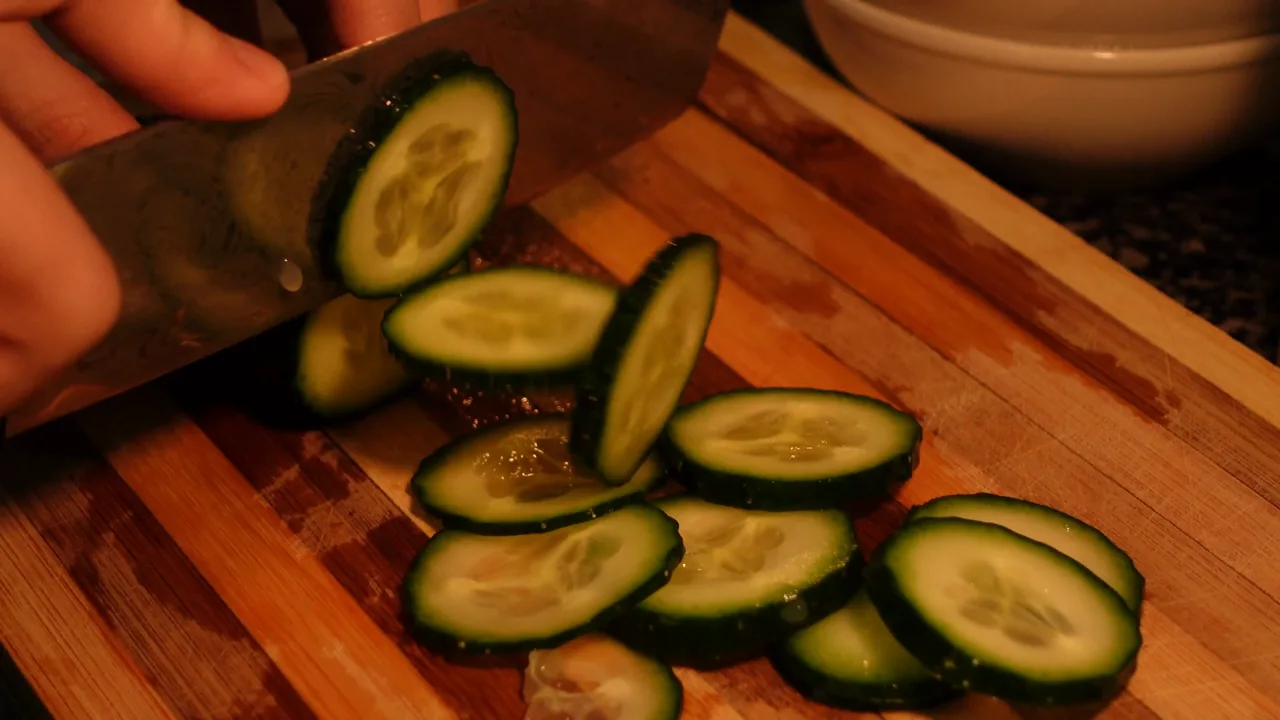
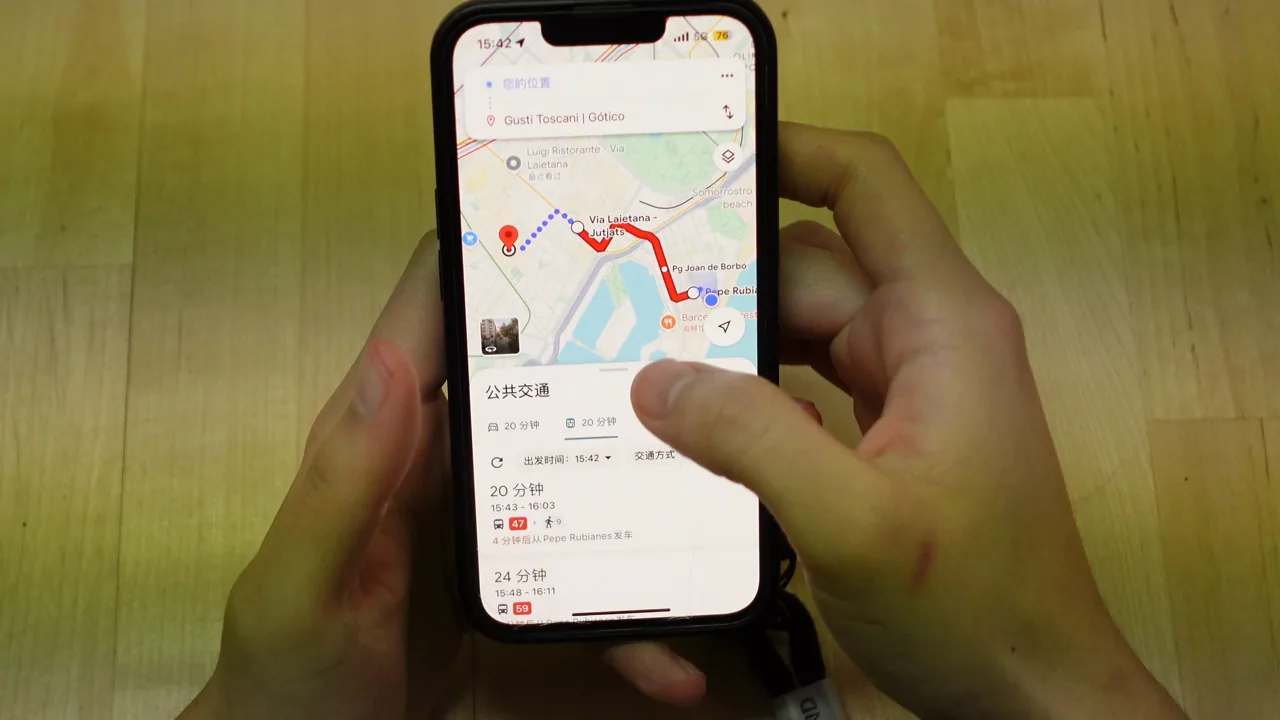
The project film, 2:30, follows an ordinary food day and ends on a cloud at the table. The cloud is an AI-generated shot; the rest is filmed.
Chapters
03The concept
Whatever reaches the cloud fills a second stomach.
Design question: how can food data be felt and seen without changing the routines? Below, one action is followed from the phone to the body; each layer carries one decision.
An existing habit is the trigger. Anything that sends food data to the cloud counts, from a post to a few seconds of looking. Feeding it on purpose would make it a game.
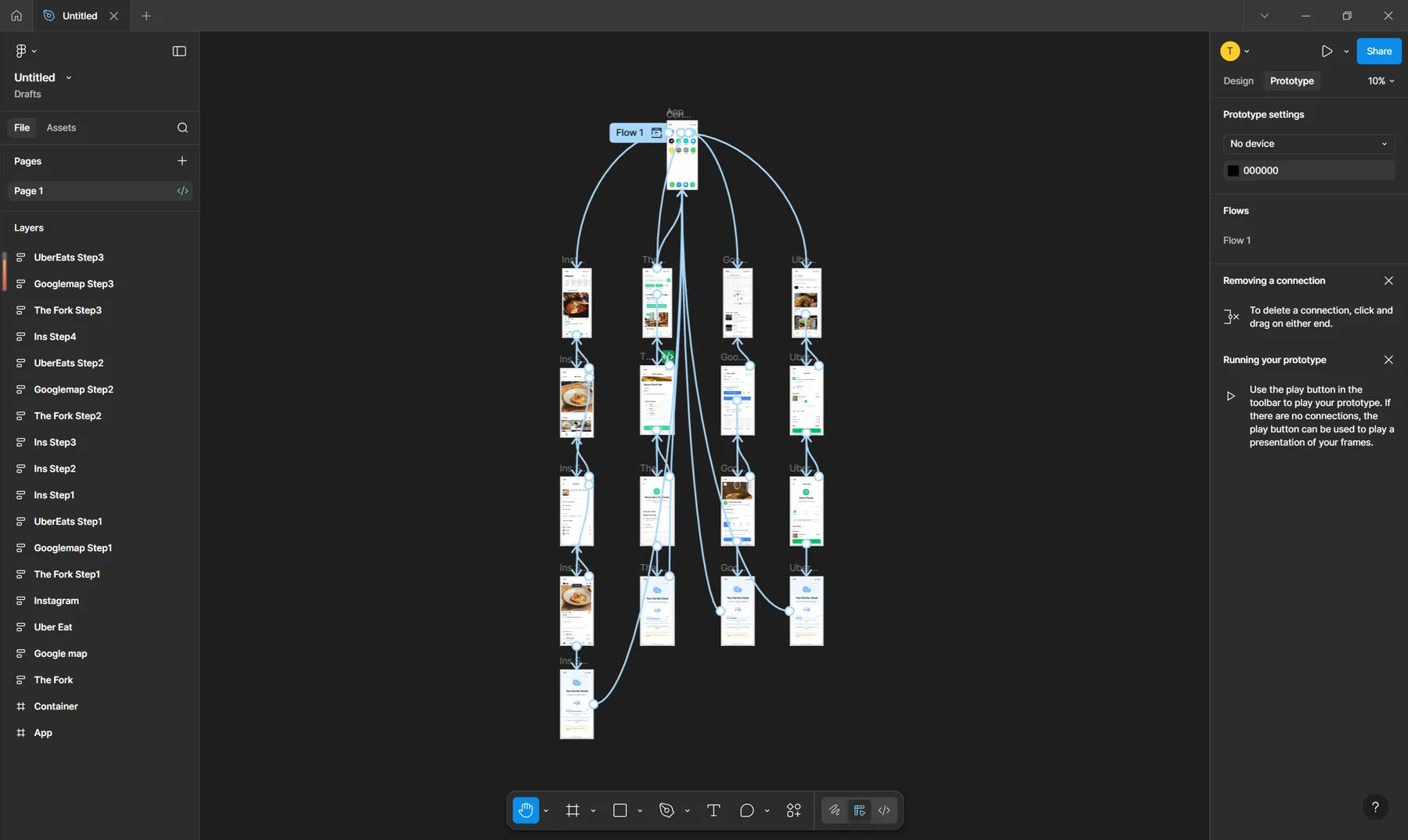
Each action adds its own amount of air.
- Instagram+30
- TheFork+25
- Google Maps+15
- Uber Eats+10
- looking, scrolling+1–2
the prototype’s scores per action · not measured air
The chain
phone → web app → laptop → USB → Arduino Uno → L298N → 12 V air pump ◆ safety limit
◆ my reading Eating tells you when you are full. Data collection sends no such signal.
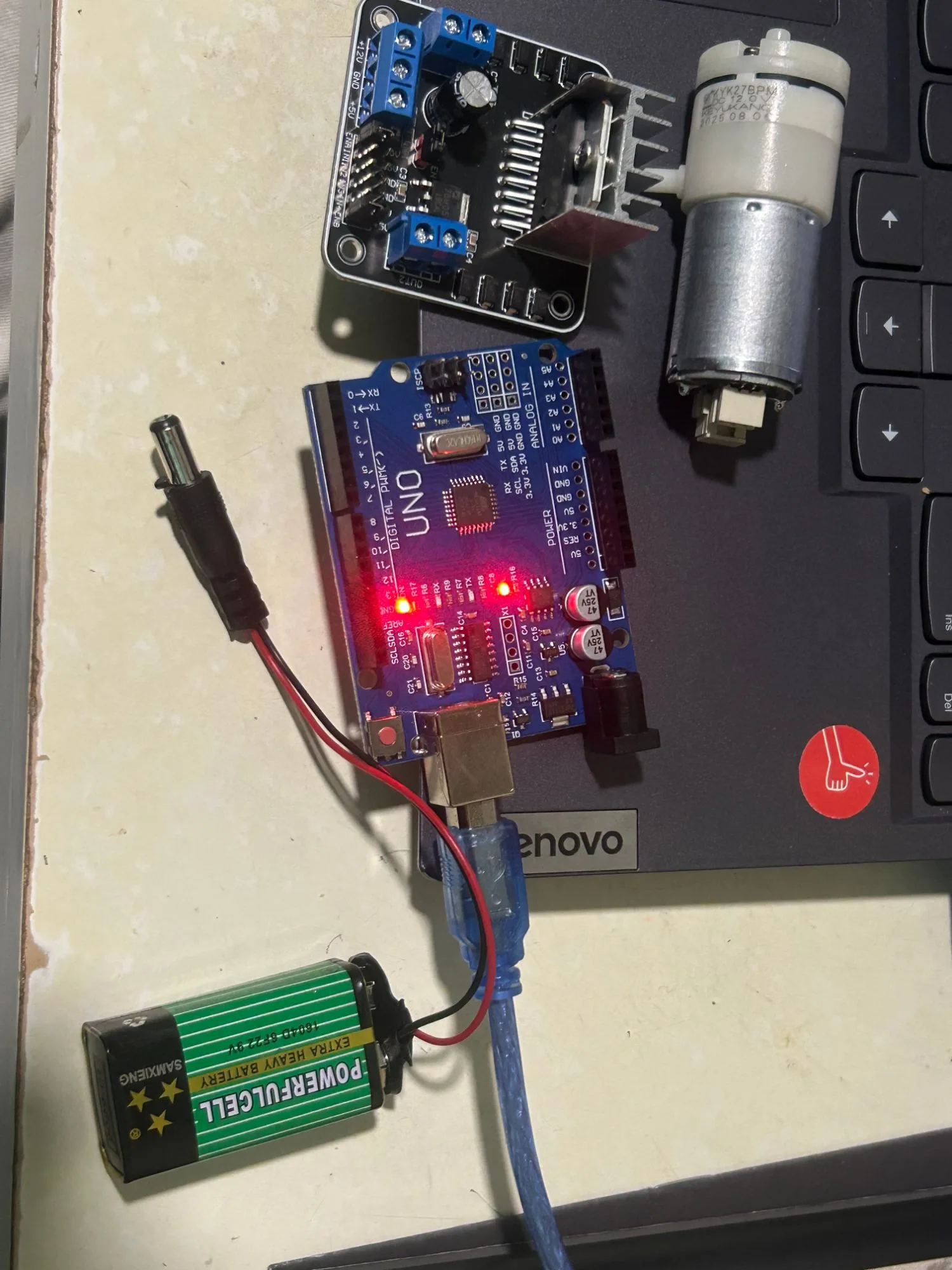 the partsArduino Uno, an L298N driver, a 12 V air pump, a 9 V battery.
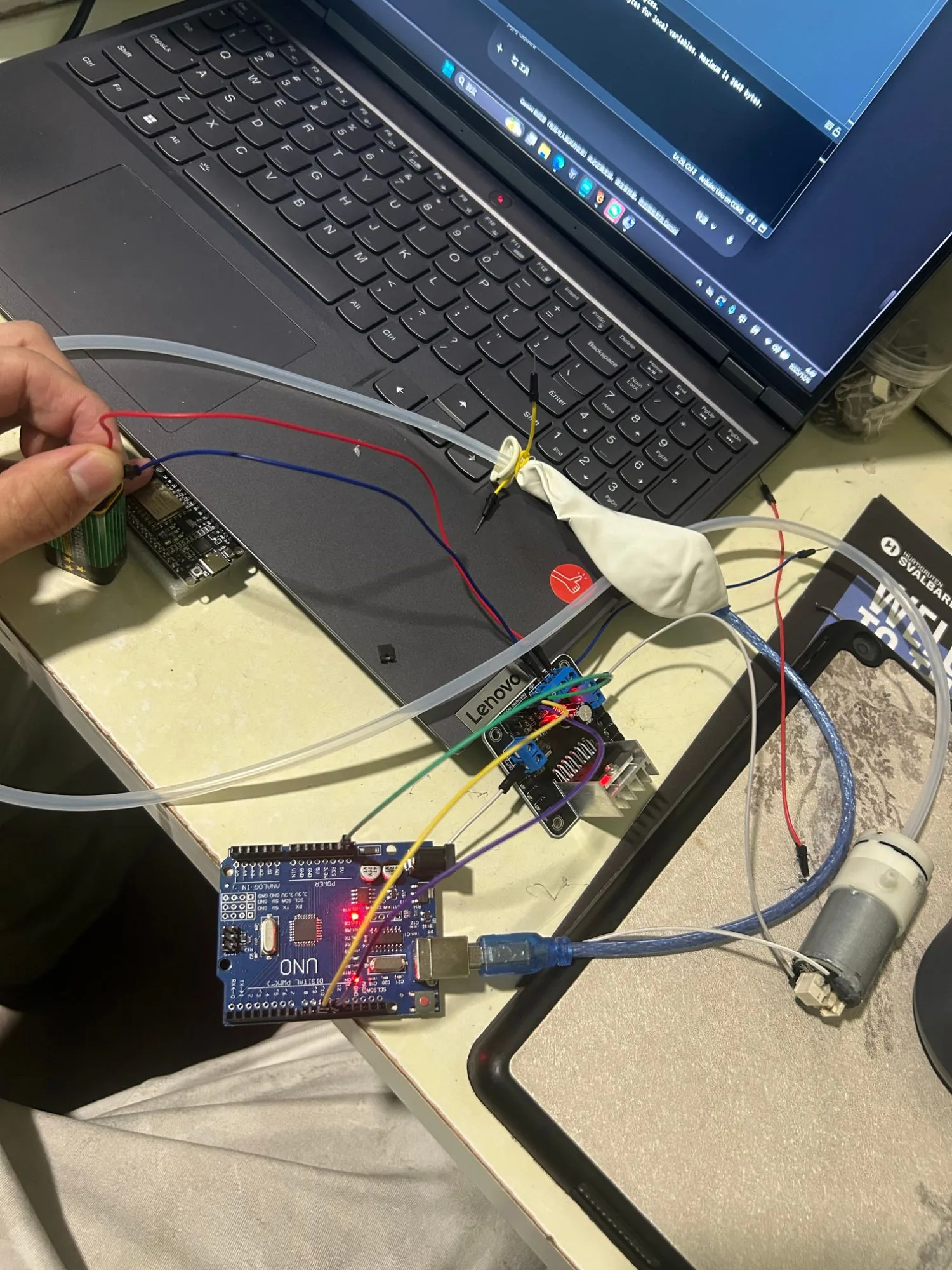 pump testPump on a balloon.
The first inflation, wired to the laptop.
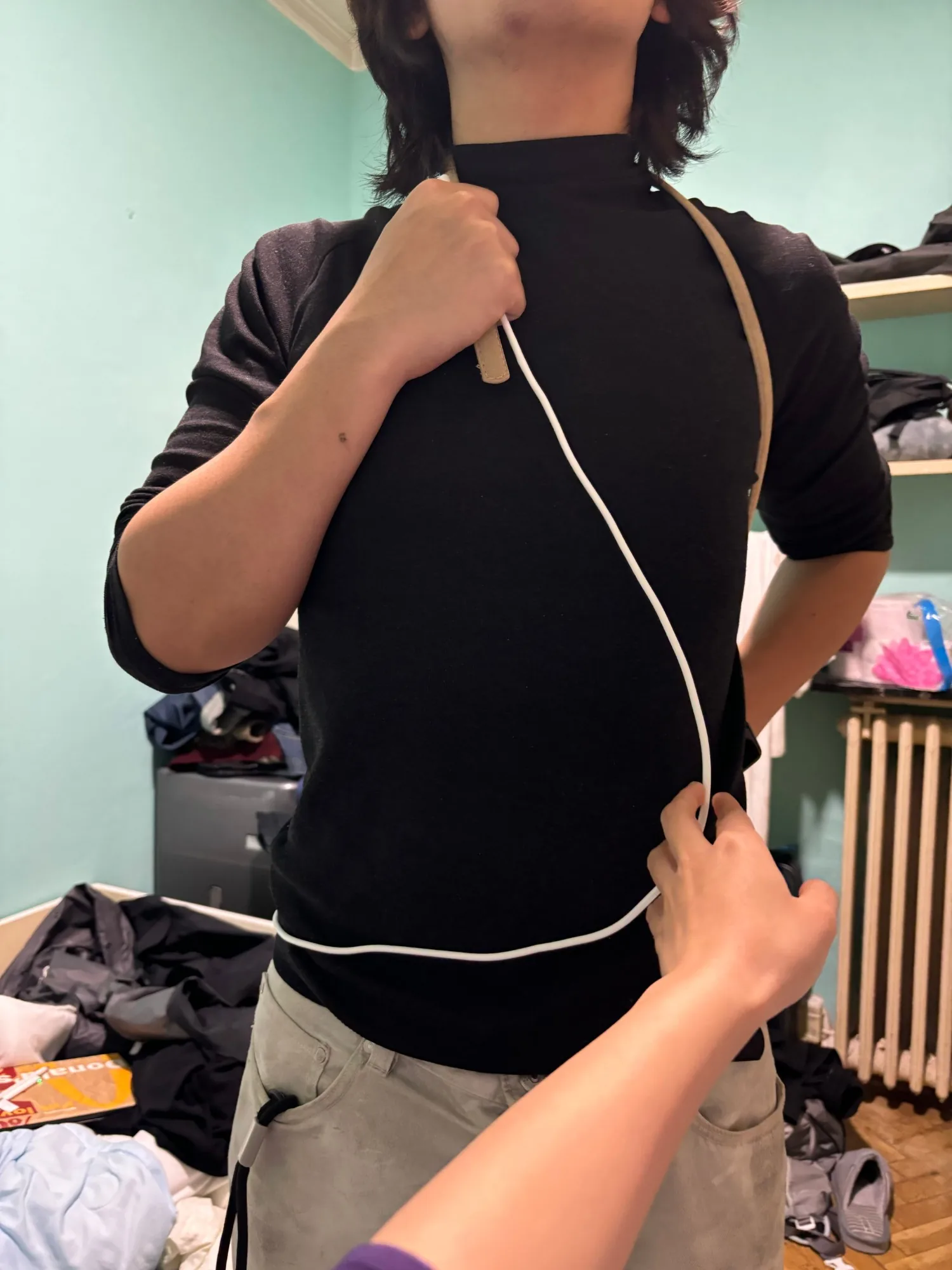 a · traced on meOutside the torso.
Traced on my own body; mine stays the same.
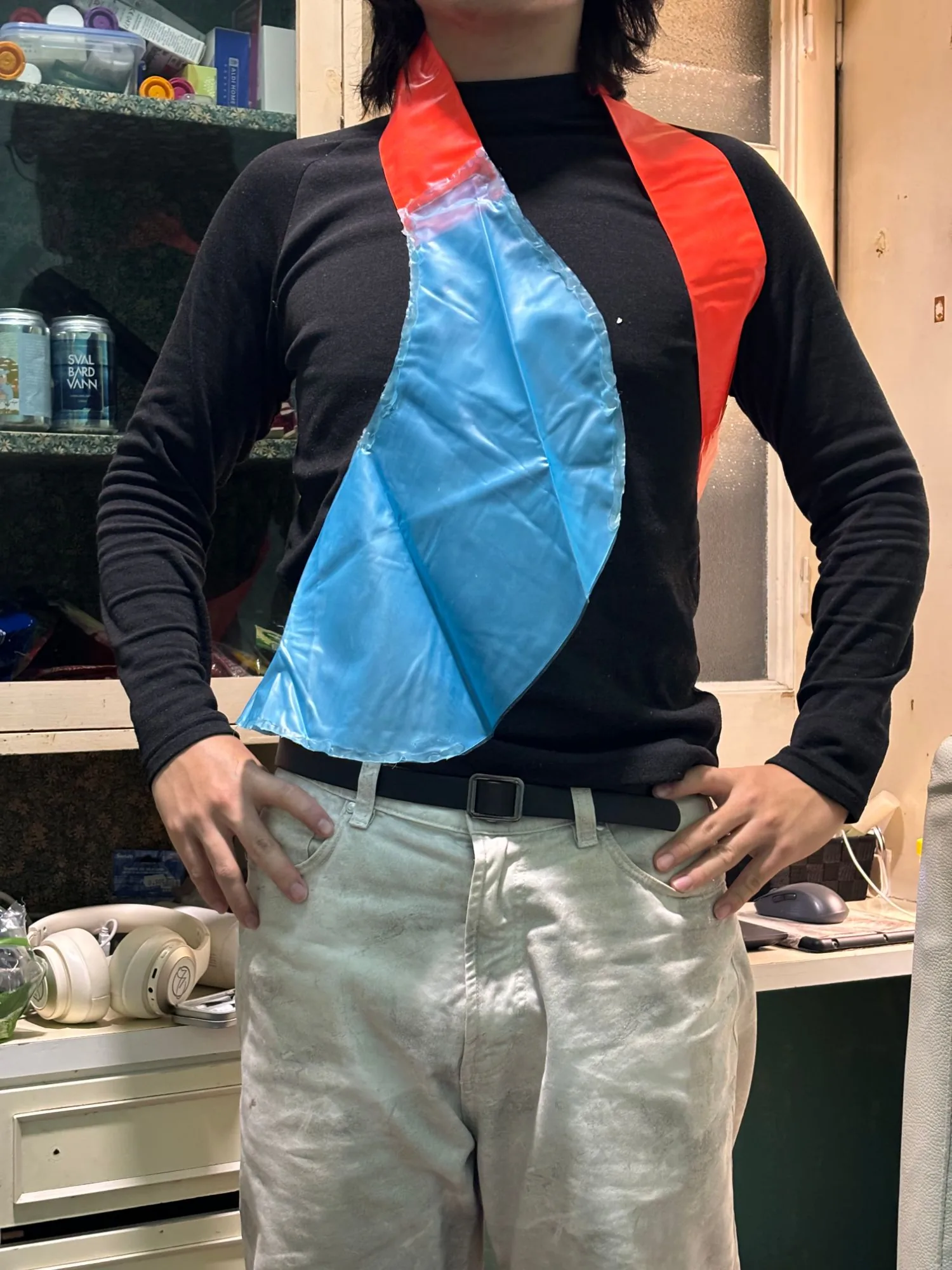 b · first bladderThe form is a stomach.
A sealed TPU bladder ties the data to eating.
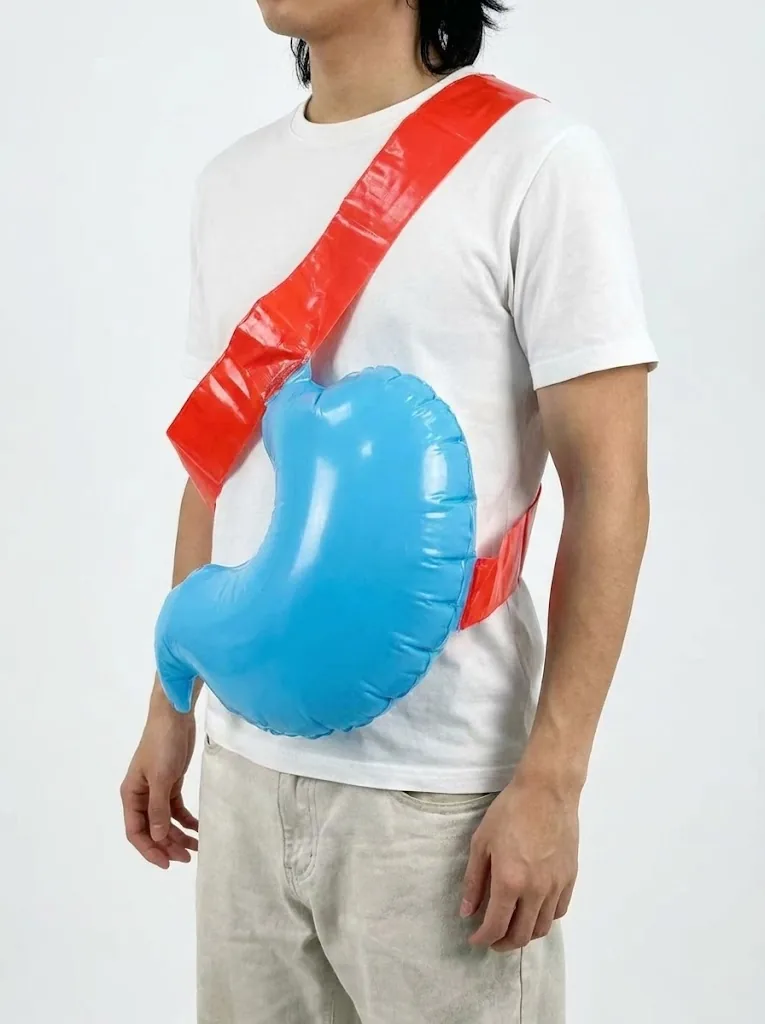 c · inflated, studioVolume replaces numbers.
No counter on the device, only bulk and pressure. Retouched with AI.
04The show
One wearer felt data had weight.
At the 2026 show, Algorithmic Intimacy in Warfare Times, visitors scanned a QR code and fed it from their own phones. Three remarks stayed with me.
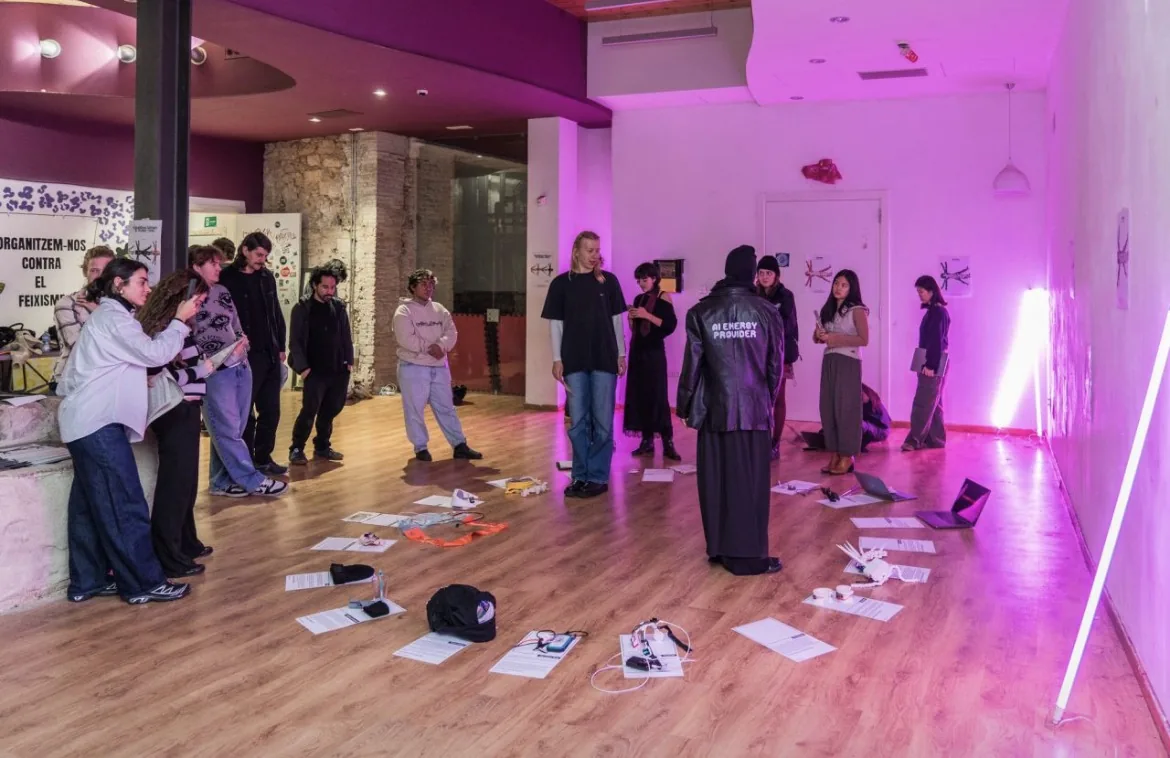
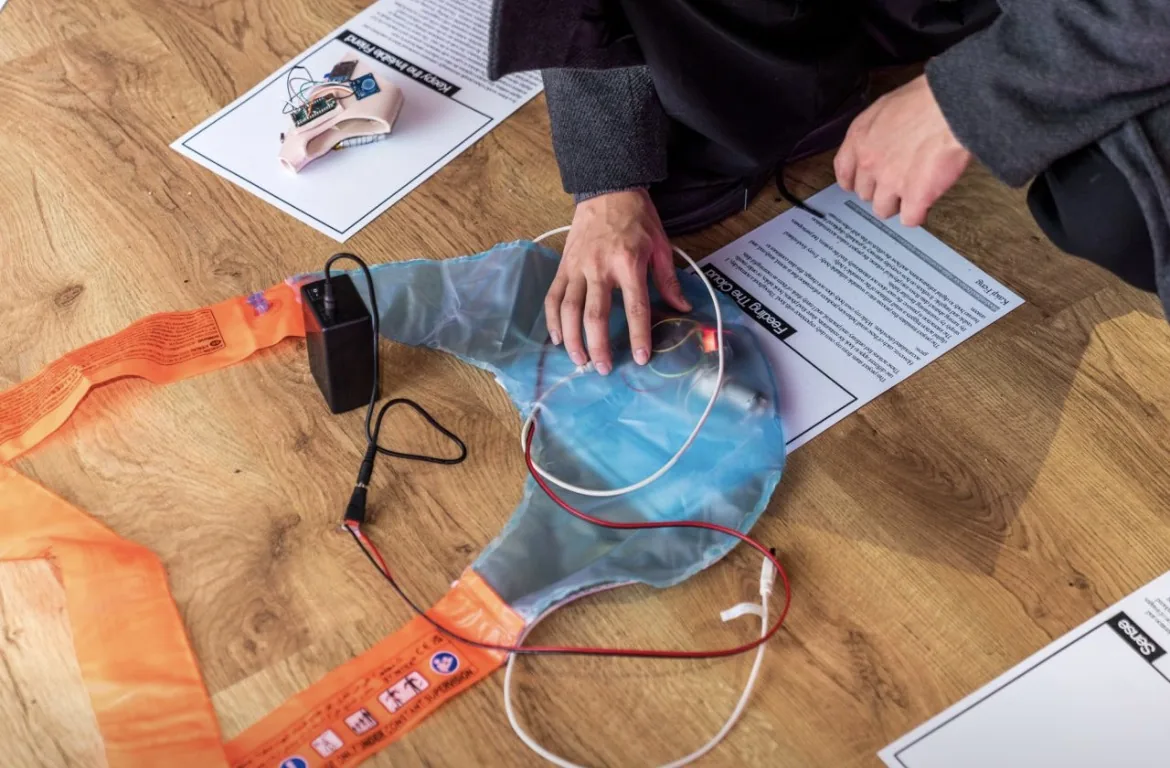
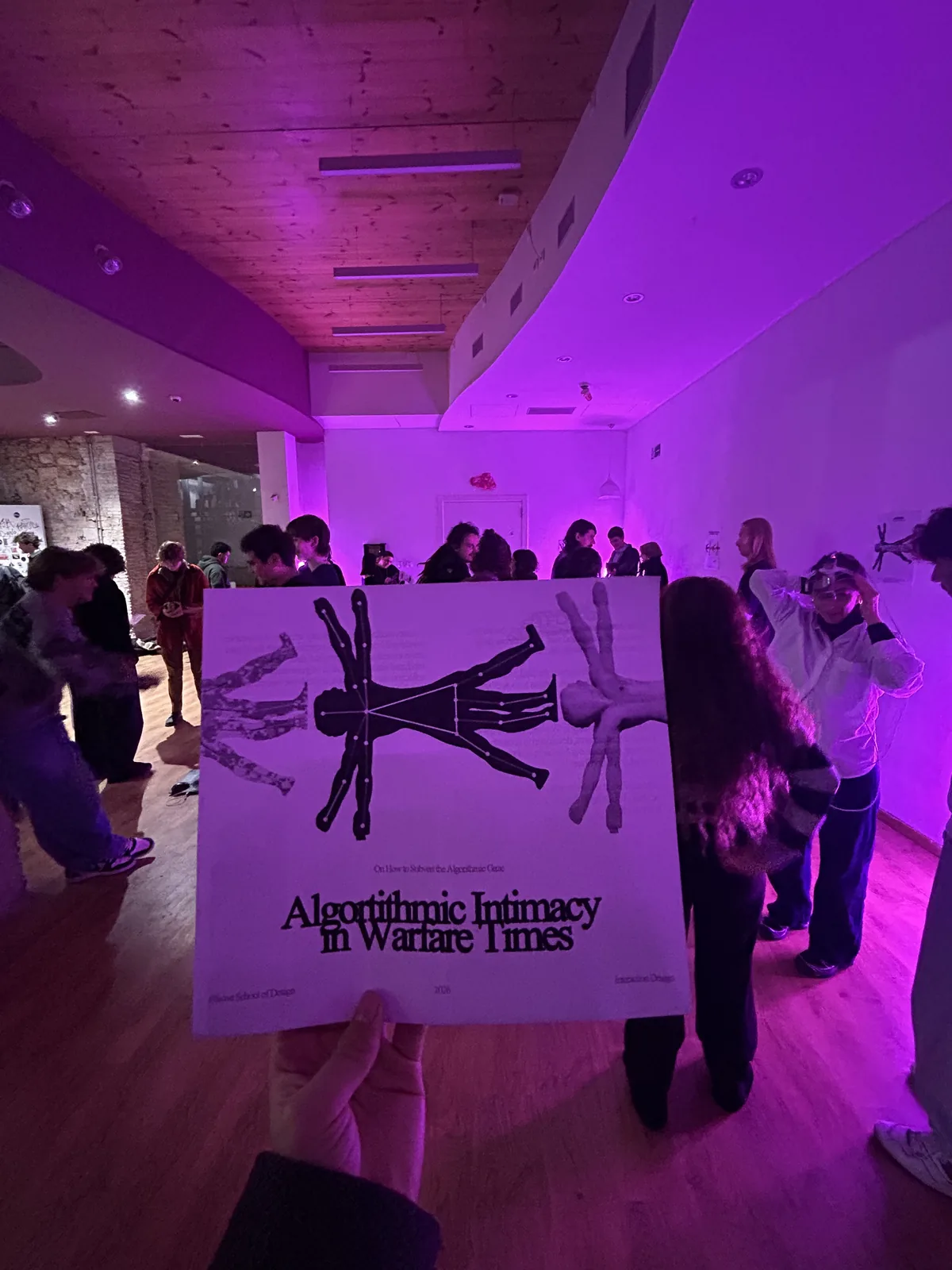
recalled, paraphrased with permission · not a study
- Mexico, wore itSaid you feel yourself slowly getting full when you eat; wearing it, they felt data’s weight and volume for the first time.
- Norway, friendWondered what all this data ends up feeding.
- Italy, classmateKnew Uber Eats learns their taste, but had never seen an Instagram food post as feeding the cloud.
→ my reading A balloon only says “more”, not what a post hands over.
05Data Skin
Data Skin names what a meal becomes.
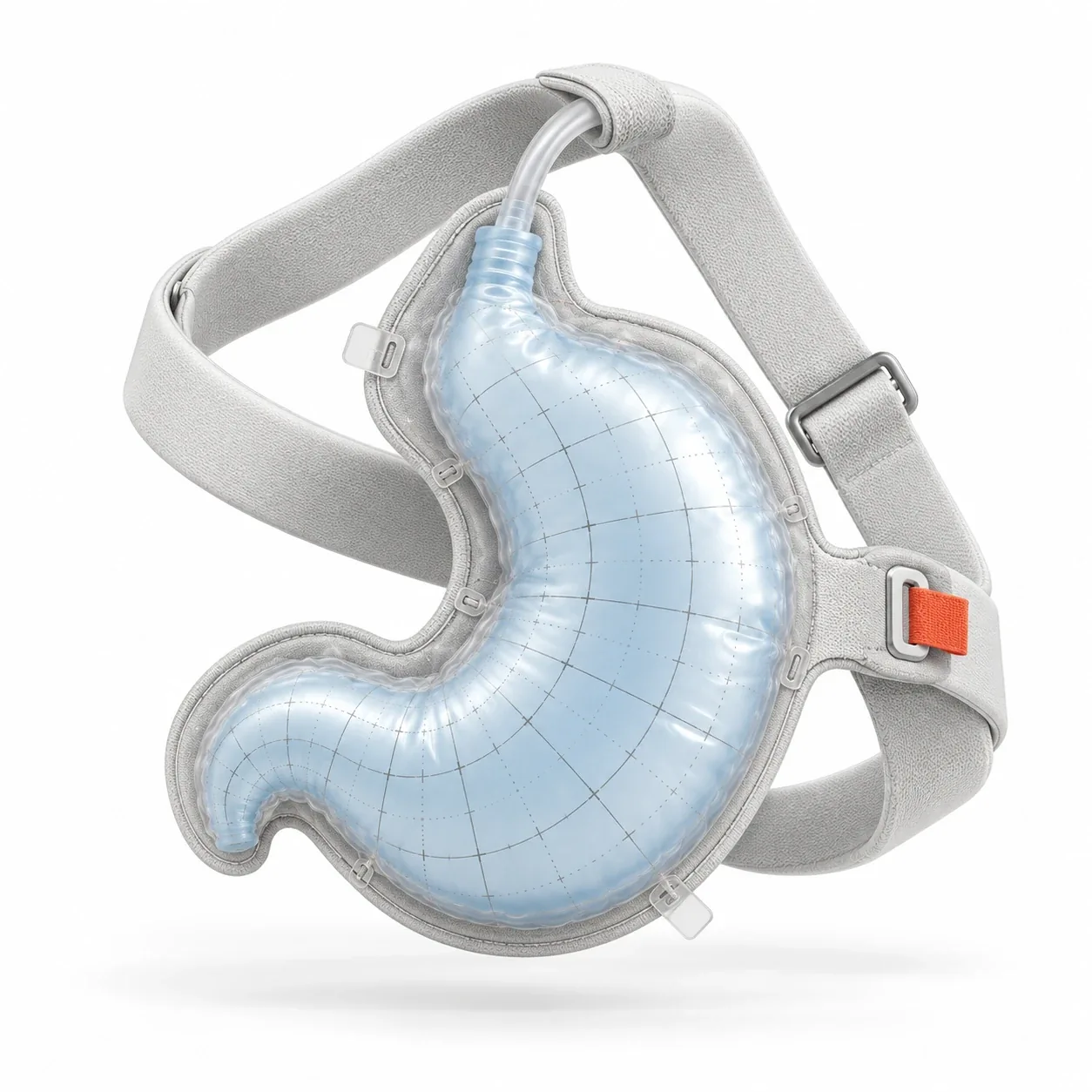
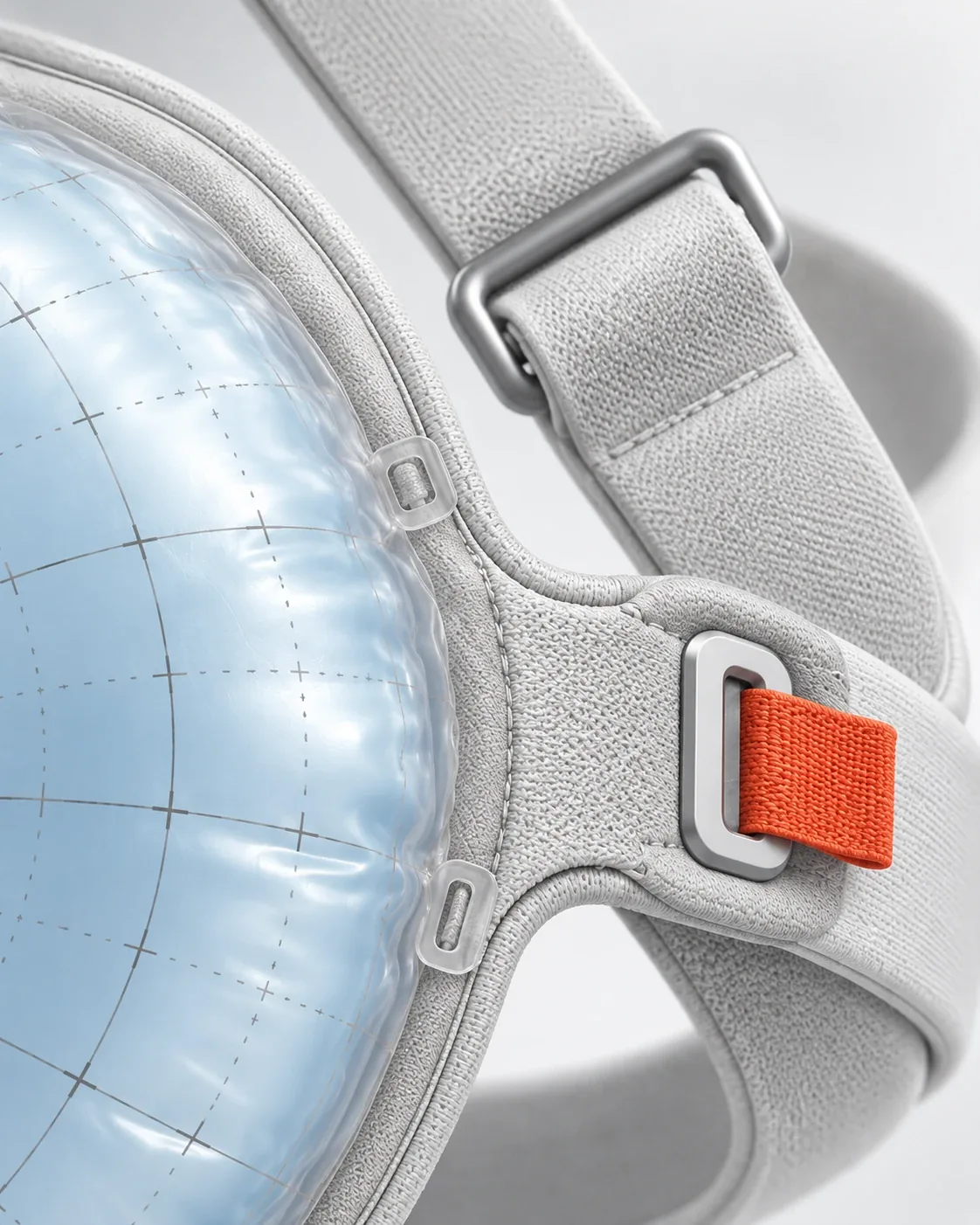
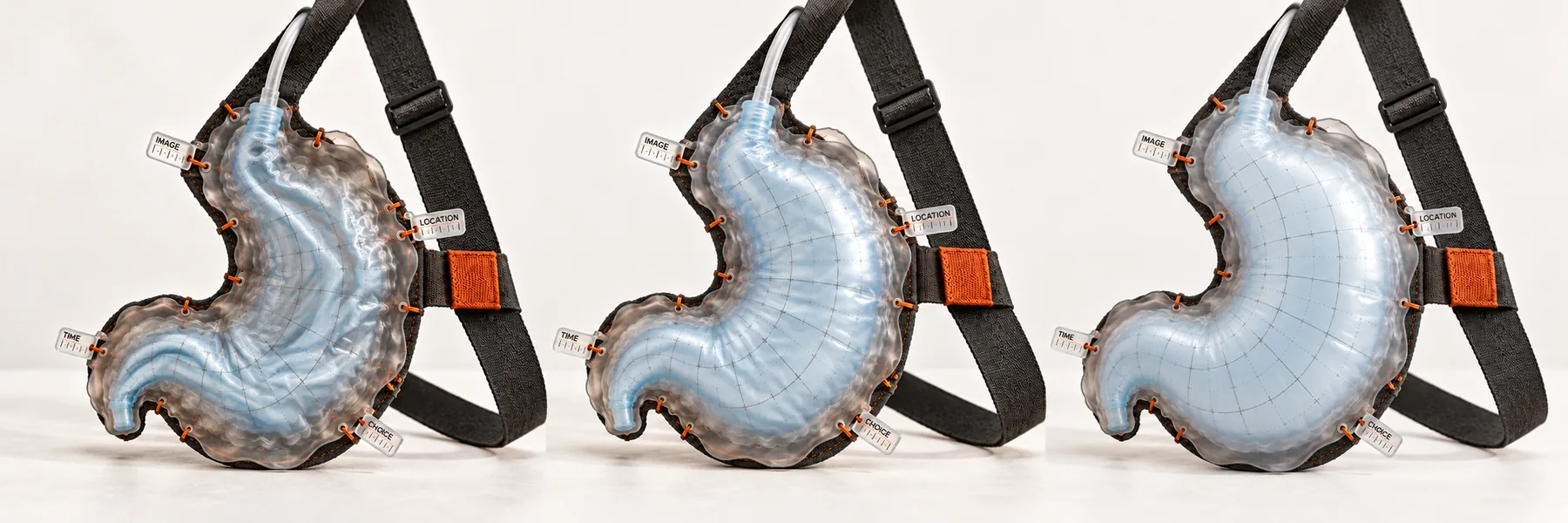
Self-initiated after the exchange, 2026. The input is the same. Over the bladder sits a gridded skin; as air comes in, the grid shifts against four fixed tags: IMAGE, LOCATION, TIME, CHOICE.
 1234
- bladderan airtight TPU bladder, light blue: it receives
- grid skina soft TPU skin with a printed grid: it changes
- PET tagsfour fixed index tags at the edges: they describe
- orange cordties the skin’s edges to the backing and keeps them visible
- backingdark fabric with the strap: it carries the wearing
Next, not run: a diary study with wearers. Does a post start to feel like an order?
What this record can't say
- The scores per action are the web prototype’s own numbers; no air volume was measured, and nothing was counted at the show.
- The three remarks are recalled months later and paraphrased; they are not a study.
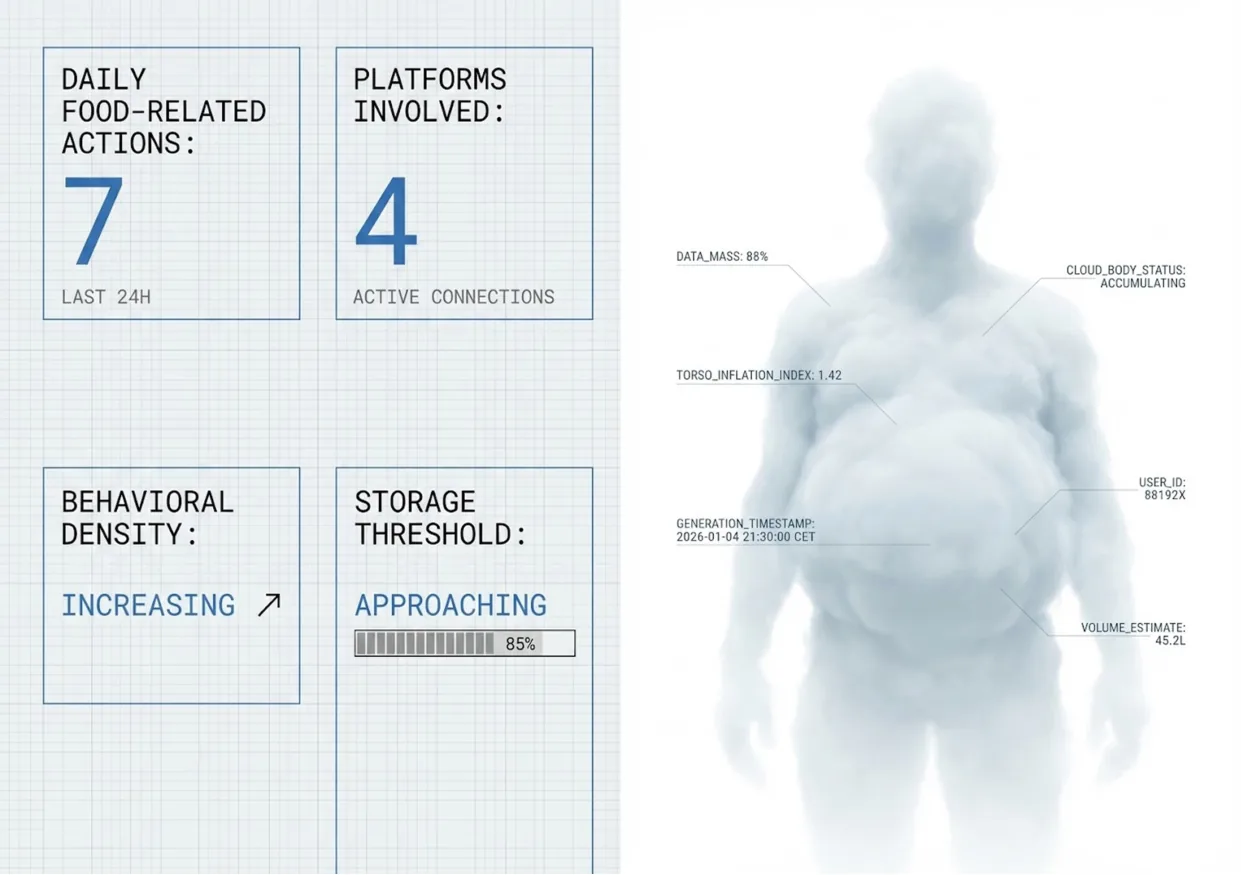
- The booklet’s data panels show invented figures; they are the book’s concept language, not records.
- Data Skin is a built object shown through AI-enhanced visuals and concept renders; its diary study with wearers is planned, not run.
- The studio photographs of the first version were retouched with AI; the process and show photographs were not.
AI use
Parts of the code of the web prototype were written with AI coding assistants. The cloud shots in the film are AI-generated, the studio photographs of the first version were retouched with an AI image tool, and the Data Skin visuals and concept renders were made or enhanced with AI image tools.
Details
- Title
- Feeding the Cloud. A critical wearable that gives food data a body.
- Medium
- An inflatable second stomach, worn · a web prototype of four apps that triggers it · a booklet, 19 pp. · a film, 2:30 · Data Skin, a second version with a gridded skin
- Skills
- Figma · web prototyping · Arduino pump control · pneumatics · video
- Tools
- Figma · a web prototype in HTML and React · Arduino Uno, an L298N driver, a 12 V air pump · TPU
Process photographs unretouched. The studio photographs of the first version, the Data Skin visuals and the film’s cloud were made or enhanced with AI image tools. Show photographs 2026, a public exhibition. The three remarks are recalled and paraphrased with permission. The scores per action are the web prototype’s own, not measured air. The booklet’s figures are fiction.