Feng Kaiqi Design and research

An essay, 2026

Visual Branding and the Politics of Gentrification

Barcelona through Three Urban Mirrors

When I first arrived in Barcelona, the city seemed unusually aware of its own image. Its pavements, façades, monuments, shopfronts, housing photographs and museum narratives form a visual system that makes the city easy to recognise and consume. This essay asks what that system does to urban belonging.

Year
2026
Role
Sole author: walking fieldwork, photographs, diagrams and writing
Fieldwork
Barcelona, everyday walks, 2025–⁠26Huilongguan and Beijing Pixel, four visits, September 2024Linnahall, Tallinn, December 2025Zhangyuan, Shanghai, from documents
Status
Preprint on Zenodo, August 2026

01The branded city

A grid ready for the camera.

I treat city branding not as a logo or a campaign but as a distributed spatial interface: a set of visual and sensory cues that organises who and what becomes visible. In Barcelona the 1992 Olympics gave it political will and the Eixample grid a perfect canvas. Walking the city every day as an international student, I read it in shopfronts, streets, rented rooms and queues.

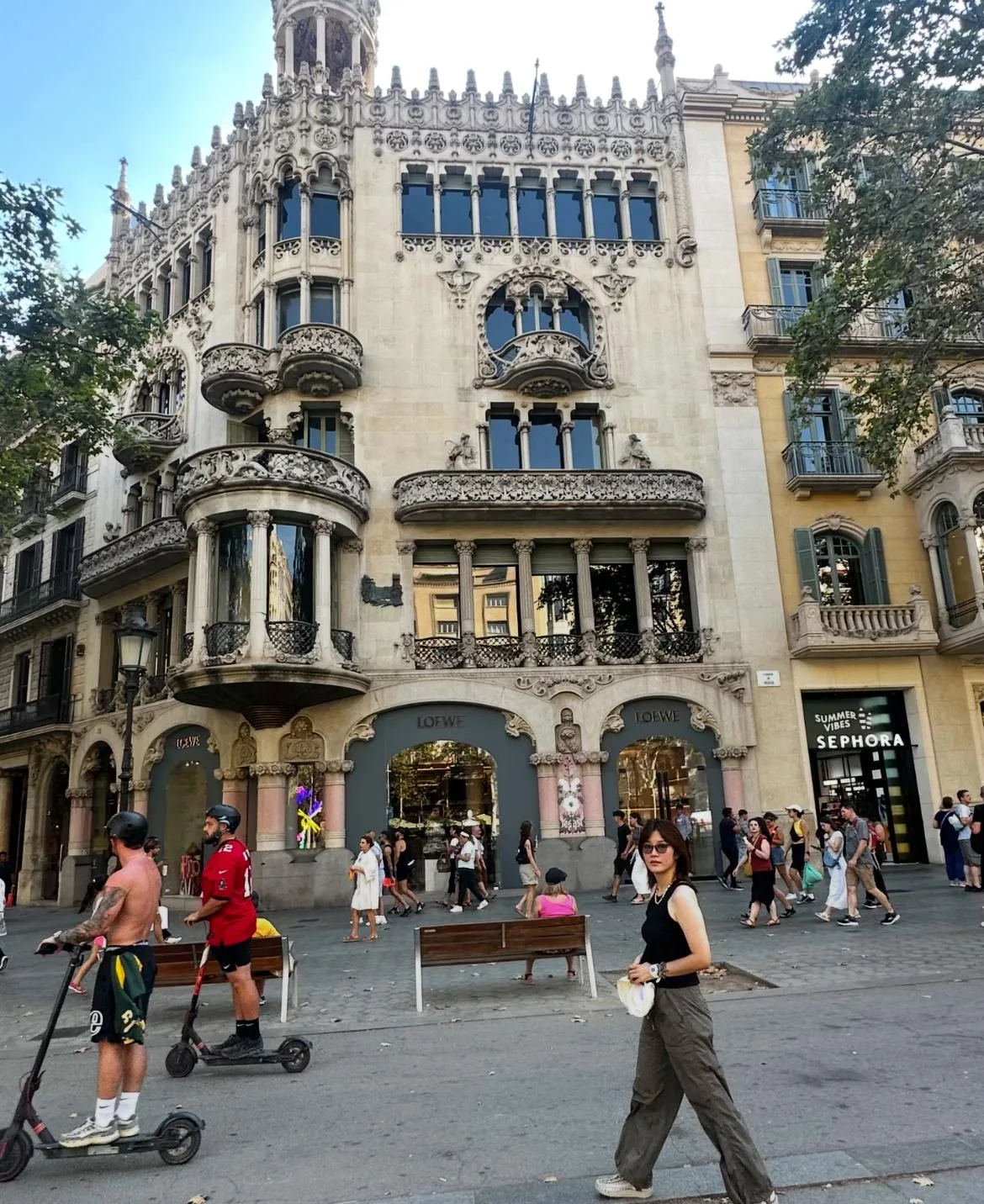
A chamfered Eixample corner: pedestrians and e-scooters in front of a Modernista building
The chamfered corner of the Eixample. The predictable urban form creates a seamless visual rhythm, but also regulates movement and behaviour in public space.
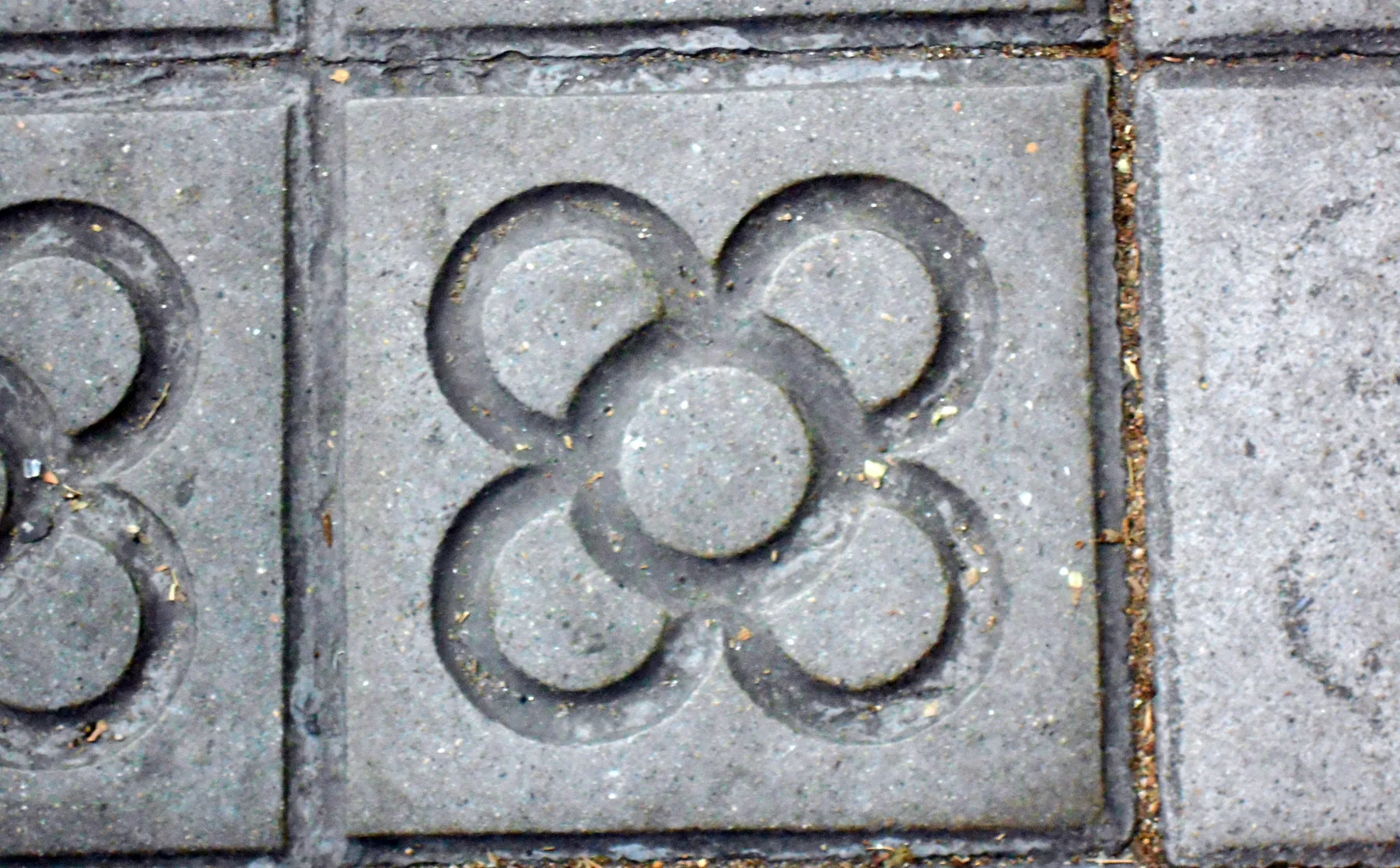
A Barcelona pavement tile with the four-petal Flor de Barcelona pattern
Branding on the ground. The ‘Flor de Barcelona’ panot turns the pavement itself into a recognisable visual code. Walking in Barcelona becomes a continuous encounter with the city’s identity. Photograph: Canaan, Flor de Barcelona (2015), Wikimedia Commons, CC BY-SA 4.0; cropped and resized.
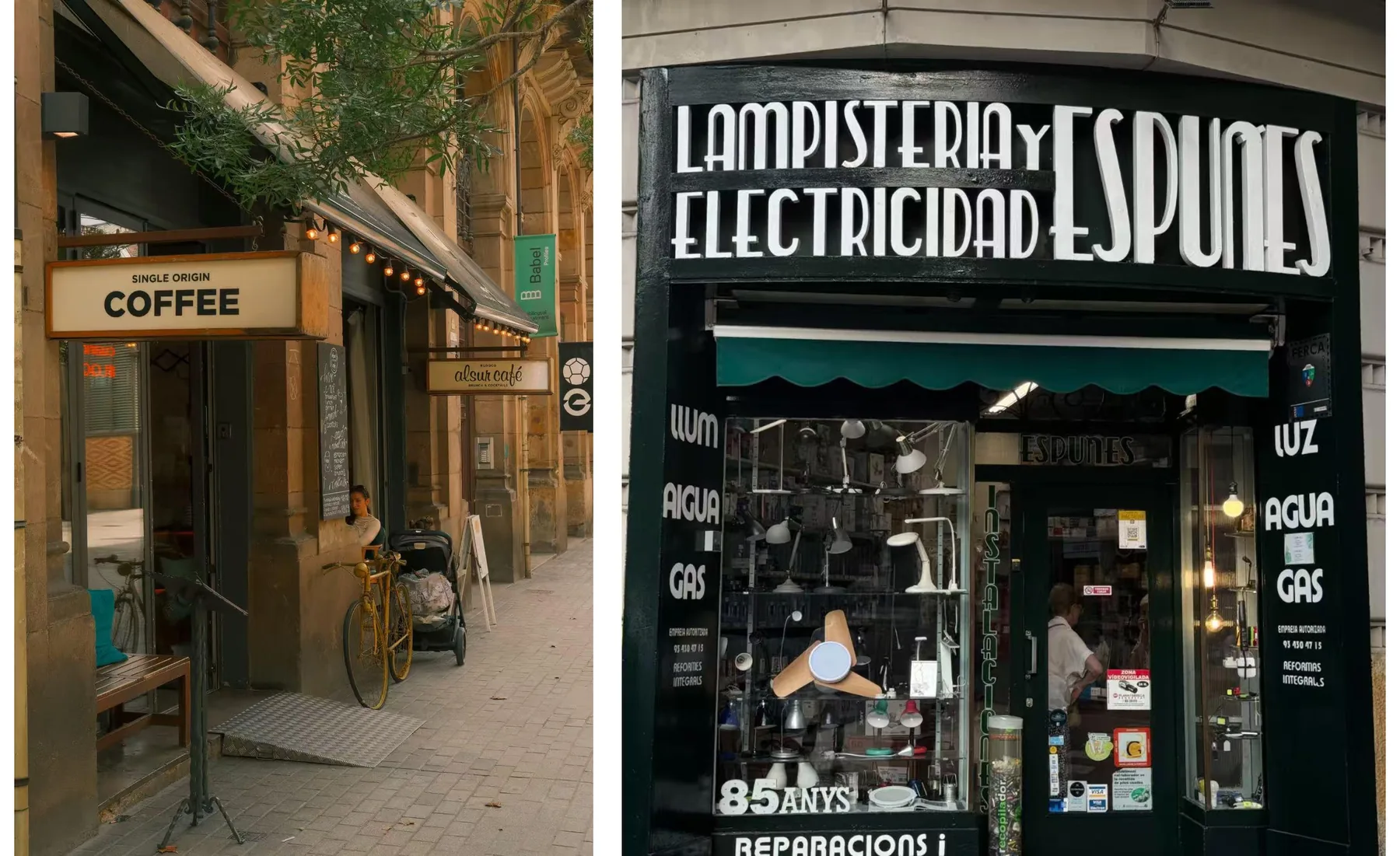
Two shopfronts: a specialty coffee shop, and an old electrical shop whose sign says it is 85 years old
The aesthetics of functional change. A new consumption space appears alongside a long-standing local electrical service shop. The shift is visible in material, transparency, and the language of display.
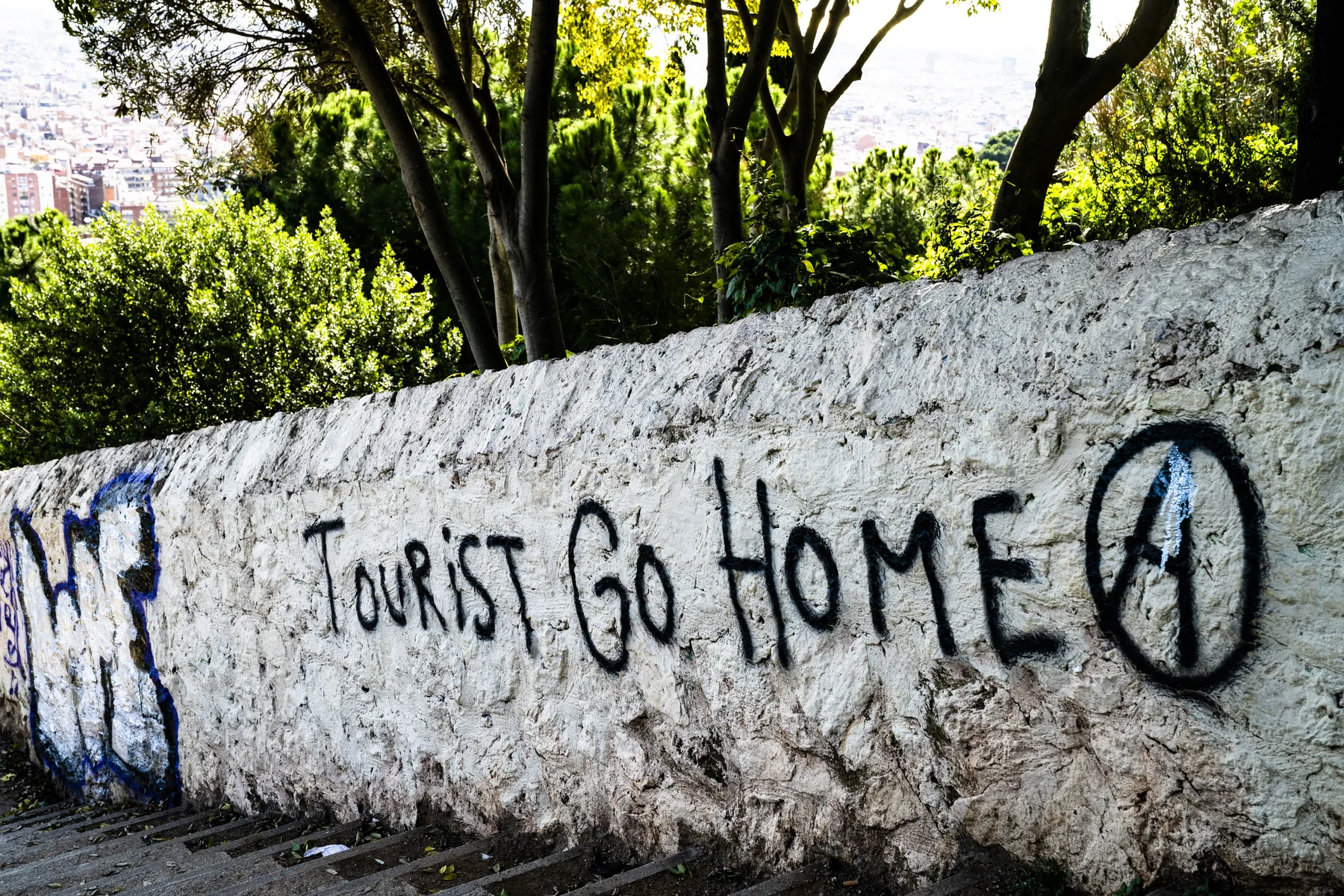
‘Tourist Go Home’ painted on a whitewashed stone wall under trees
The writing on the wall. ‘Tourist Go Home’ graffiti contests the public branding of Barcelona. Photograph: Billie Grace Ward, Tourist Go Home (2019), Wikimedia Commons, CC BY 2.0; cropped and resized.
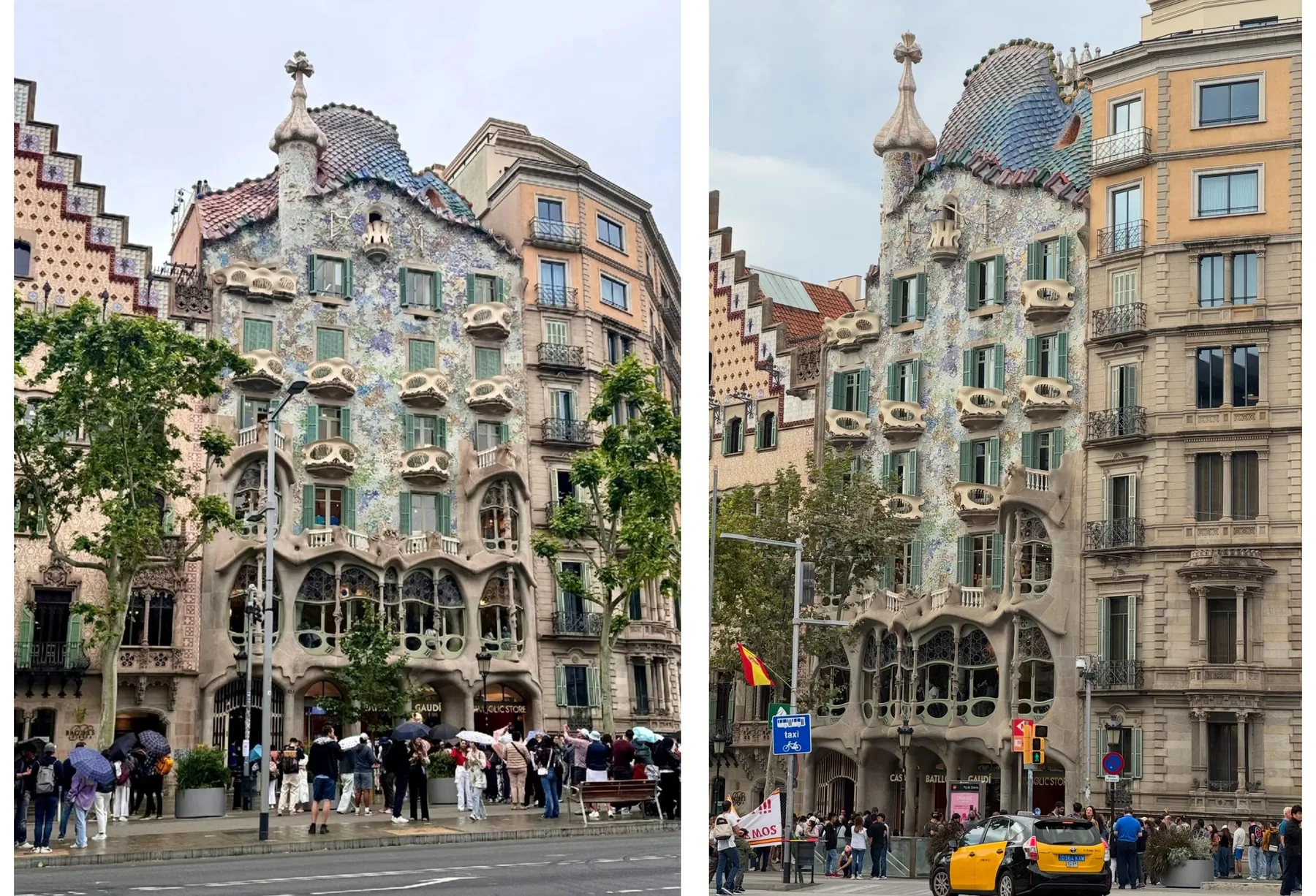
Two views of Casa Batlló, with crowds and a queue on the pavement in front
The privatisation of the sidewalk. Casa Batlló is both an architectural landmark and a generator of queues, gazes, and obstacles in ordinary circulation.

02Three mirrors

Cities as mirrors, not matching cases.

The comparison is asymmetrical on purpose. I do not compare Barcelona, Beijing, Shanghai and Tallinn in their entirety, but specific visual operations: what happens to inconvenient histories, essential residential spaces, preserved architecture and obsolete monuments.

  1. BarcelonaSustained everyday experience: months of walking as an international student.
  2. Huilongguan, BeijingFour focused site visits in September 2024, two there and two to Beijing Pixel, a point of reference rather than a fifth case.
  3. Zhangyuan, ShanghaiA documented heritage-redevelopment case, read from public sources rather than fieldwork.
  4. Linnahall, TallinnA direct visit in December 2025, with historical and current planning sources.

03Four regimes

Visibility is an operation, not a ranking.

Cities do not only hide inconvenient realities. They may preserve them as heritage, keep them at a distance, retain the architecture while replacing its use, or leave places unresolved.

SiteOperationWhat stays visibleWhat recedesEffect
Barcelona / Bon PastorAbsorptionWorking-class housing as public heritageOngoing struggle and present-day housing precarityRecognition through cultural inclusion
Beijing / HuilongguanSeparationImperial core and futuristic centreEveryday commuter housingDependence with unequal representation
Shanghai / ZhangyuanProgrammatic overwritingHistoric fabric and architectural detailFormer residential use and inhabitantsHeritage continuity carries new high-value uses
Tallinn / LinnahallSuspensionMonument, ruin, unresolved memoryStable programme and final narrativeAmbiguity remains; access is uncertain
Table 1. The regimes are analytical terms derived from situated encounters, not universal city types.

Absorption

MUHBA Bon Pastor, Barcelona

A preserved block of cases barates, cheap houses built in 1929, tells the history of working-class housing. The city expands its official image by incorporating a marginal history, and recognition arrives once the houses are no longer lived in as they once were.
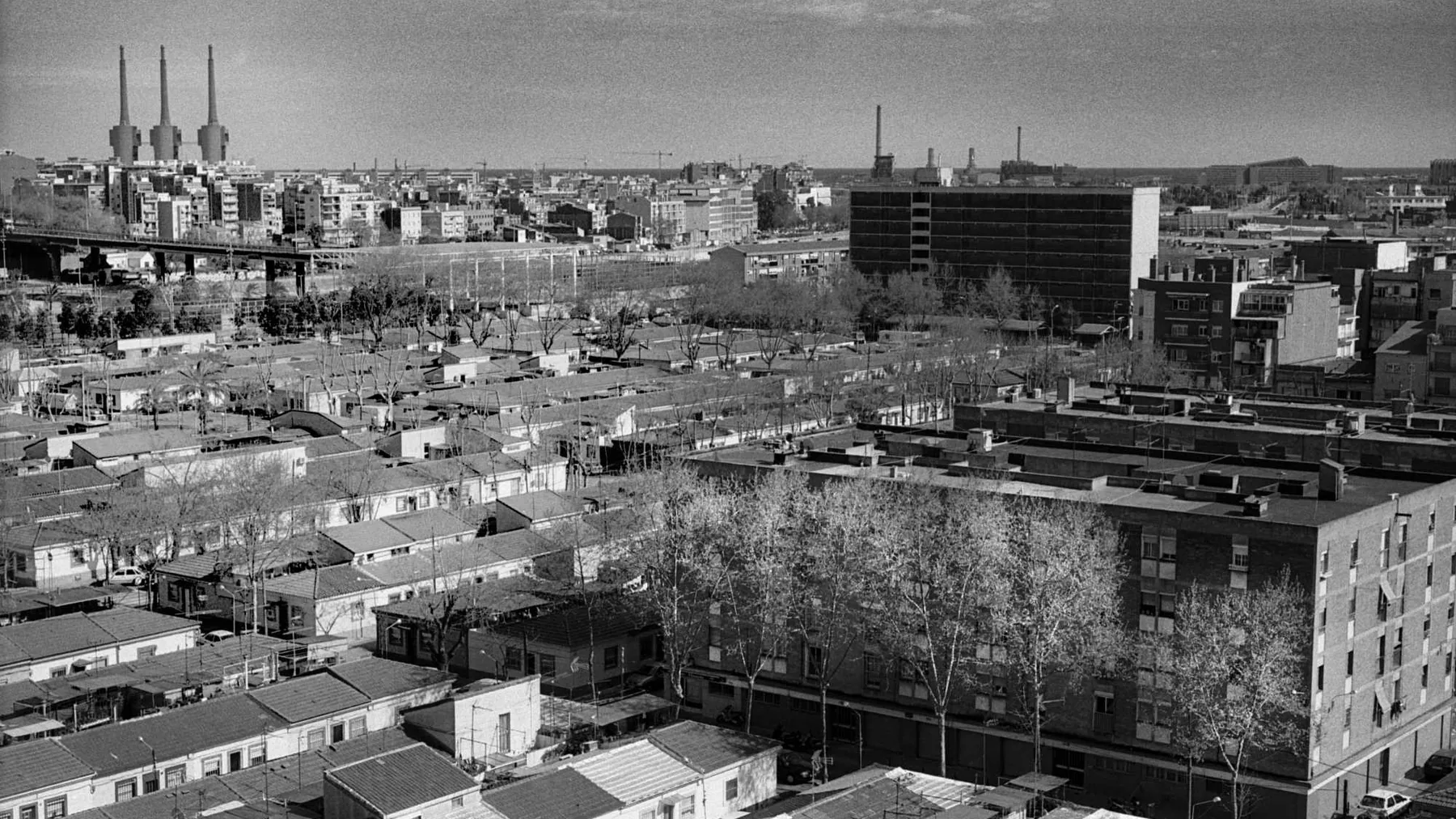
Rows of low cases barates in Bon Pastor seen from above, apartment blocks and industrial chimneys behind
The architecture of survival. Bon Pastor’s cases barates within the industrial fabric of the Besòs periphery. Photograph: Carola Pagani, Cases barates 2004 bn (2004), Wikimedia Commons, CC BY-SA 3.0; cropped.

Separation

Huilongguan, Beijing

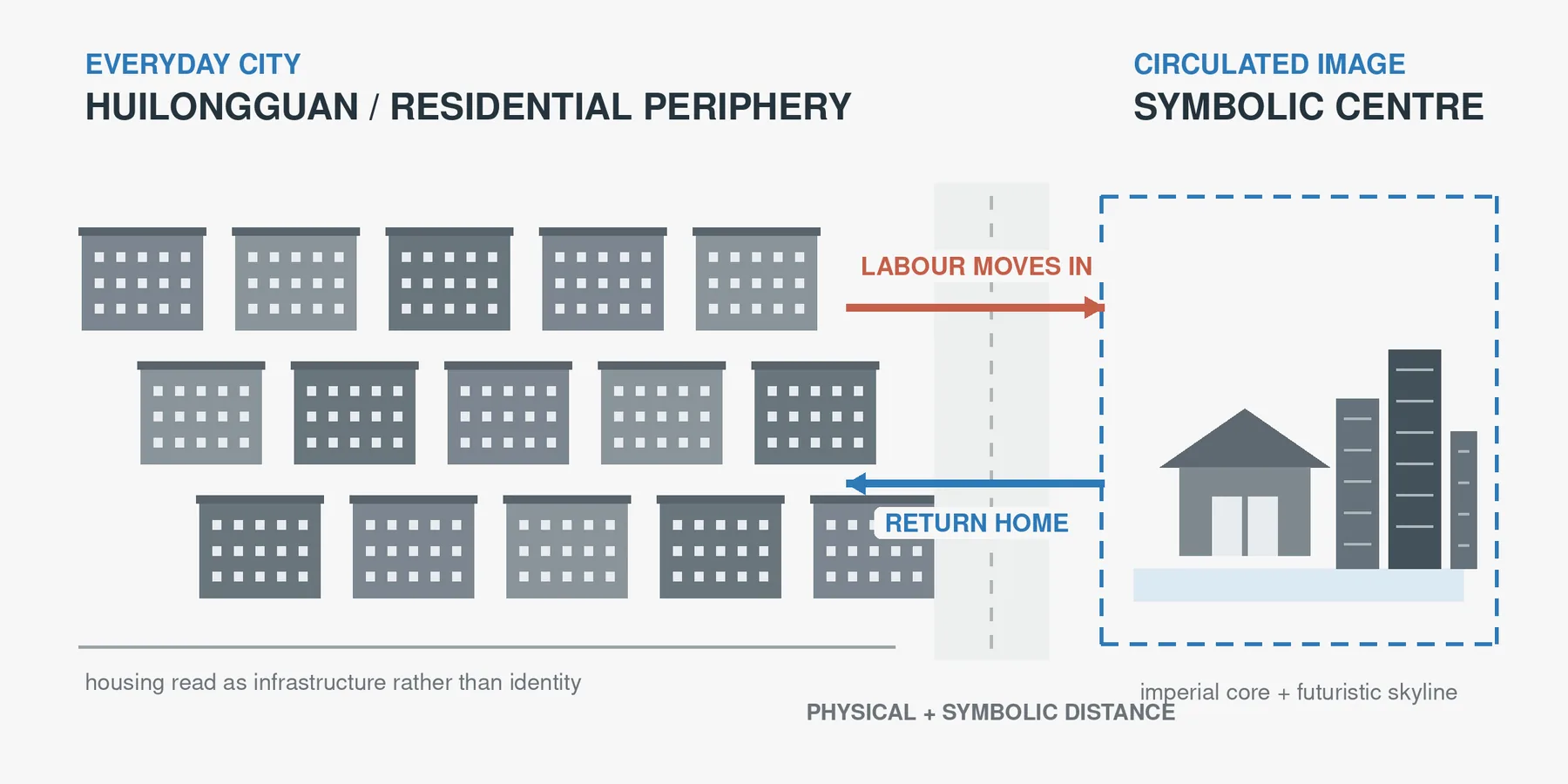
The everyday city is not destroyed or curated into heritage; it is placed at a physical and symbolic distance from the city’s most circulated image. Workers commute inward, labour and return outward.

Diagram: rows of housing blocks on the left, a symbolic centre on the right; labour moves in, and returns home
Separation as a visual regime. Huilongguan’s everyday housing remains outside Beijing’s most circulated image while labour moves inward and returns. Diagram by the author, based on Wong et al. (2020); an analytical reading, not a demographic measurement.

Programmatic overwriting

Zhangyuan, Shanghai

Preservation itself becomes a technology of change. The brick, lane names, doors and decorative surfaces remain legible while the programme of ordinary collective dwelling is largely rewritten.

  1. 01Residents leaveProtective expropriation relocates more than 1,000 households; many gain improved kitchens, toilets, and living space.
  2. 02Buildings move and returnHistoric details are catalogued. The 7,500-tonne Huayanli group is shifted by walking robots and returned.
  3. 03New programmes enterLuxury retail, culture, offices, hotel, arts venues, and underground transport occupy the preserved fabric.
Programmatic overwriting at Zhangyuan: residents leave; buildings move and return; high-end commercial and cultural programmes enter. Diagram by the author, based on Jing’an District (2022a, 2022b), Xinhua News Agency (2025) and Swire Properties (2026), redrawn for this page.

Suspension

Linnahall, Tallinn

Built for the sailing events of the 1980 Moscow Olympics, the concrete complex is visible but unresolved, and not yet fully put to work for the city brand.

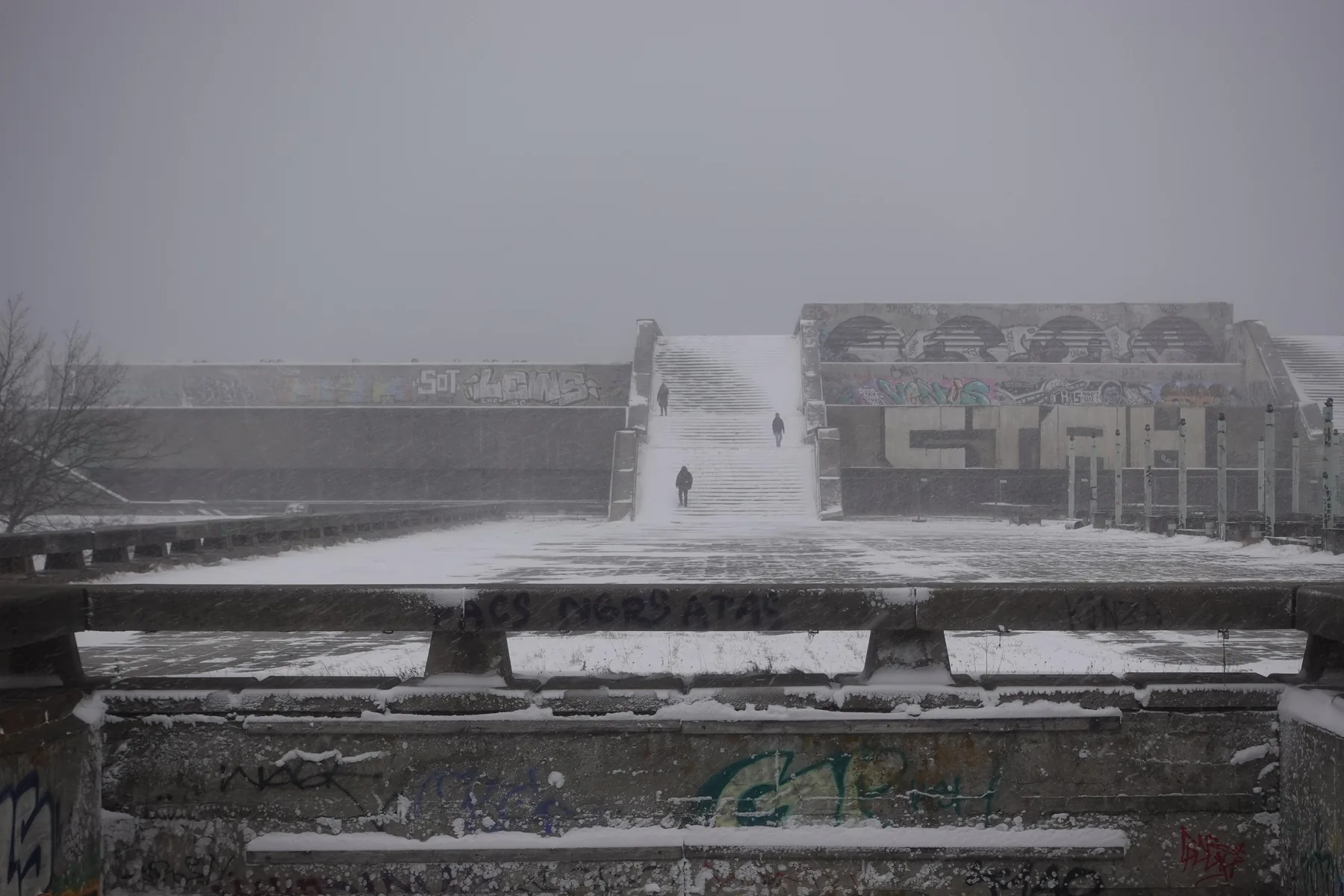
Linnahall in Tallinn under snow: weathered concrete terraces and a long stair
The unbranded monument. Linnahall remains monumental but unresolved: a protected structure, a weathered surface, and an uncertain programme. December 2025.

No regime is pure. Bon Pastor can support memory while turning struggle into heritage; Huilongguan is not invisible to residents or planning; Zhangyuan improved many homes while removing domestic life from the site; Linnahall’s ambiguity can preserve openness and produce abandonment.

04The right to the image

A city easier to consume than to inhabit.

Visual coherence is never merely aesthetic. It works as soft governance, shaping who is invited to look, who is allowed to stay, and whose everyday life can appear in the city’s image.

A truly open city is not one that looks perfect in a photograph. It is one that allows itself to be messy, unfinished, and continually rewritten by the people who live there.

Can a city have a strong visual identity without excluding those who do not fit the picture?

What this record can't say

AI use

I used ChatGPT for language editing, structural review and help locating possible sources. I checked every cited source against its original publication or institutional page, and reviewed and approved all interpretations, arguments, images and final wording.

Details

Title
Visual Branding and the Politics of Gentrification: Barcelona through Three Urban Mirrors
Medium
An essay of about 7,000 words, with nine figures and one table
Sources
Walking notes and photographs; public, planning and press sources for Zhangyuan and Linnahall
Skills
Walking-based autoethnography · comparative urban analysis · photography · diagrams · academic writing
Paper
Preprint, Zenodo, 12 August 2026 · College of Design and Innovation, Tongji University · doi.org/10.5281/zenodo.21891602

The photographs of the Eixample, the shopfronts, Casa Batlló and Linnahall, and the two diagrams, are mine; the Zhangyuan diagram is redrawn for this page from the paper’s figure. Three photographs are by others, from Wikimedia Commons, credited under each: the Flor de Barcelona tile by Canaan (CC BY-SA 4.0), ‘Tourist Go Home’ by Billie Grace Ward (CC BY 2.0) and the cases barates of Bon Pastor by Carola Pagani (CC BY-SA 3.0). They are cropped as in the paper, and the crops of the two CC BY-SA photographs are shared under the same licences.